

| Citation: |
Naeem Ullah, Busayamas Pimpunchat, Kamal Shah, Thabet Abdeljawad. NUMERICAL AND BIFURCATION ANALYSIS WITH SENSITIVITY ASSESSMENT OF A DETERMINISTIC LEPTOSPIROSIS HANTAVIRUS CO-INFECTION MODEL[J]. Journal of Applied Analysis & Computation, 2027, 17(1): 432-452. doi: 10.11948/20260054

|
NUMERICAL AND BIFURCATION ANALYSIS WITH SENSITIVITY ASSESSMENT OF A DETERMINISTIC LEPTOSPIROSIS HANTAVIRUS CO-INFECTION MODEL
-
Abstract
In this paper, a deterministic compartmental model is developed in order to study the dynamics of the transmission of leptospirosis and hantavirus co-infection with particular emphasis on the human population. The model includes compartments of susceptible individuals, singly infected classes, co-infected individuals, and recovered individuals, as well as important pathogen exposure and disease progression mechanisms. Analytical features of the proposed model are addressed, such as positivity, boundedness, the existence of equilibrium points, and bifurcation analysis. The next-generation matrix approach is used to obtain the dominant transmission threshold, denoted by, $ \mathcal{R}_0^c $ which determine the qualitative behavior of the system. The transmission-free equilibrium of the model is locally asymptotically stable when $ \mathcal{R}_0^c < 1 $ and unstable when $ \mathcal{R}_0^c > 1 $, indicating disease persistence in the population. In addition, bifurcation analysis is carried out to examine the system behavior near the critical threshold. The analysis confirm the occurrence of a backward transcritical bifurcation. The validity of the analytical results is confirmed through numerical simulations. In particular, the roles of transmission rates, recovery rates, and co-infection dynamics are studied in detail. Sensitivity analysis shows that parameters associated with infection transmission and recovery have the strongest influence on disease burden, with co-infection outcomes being especially responsive to changes in recovery rates. The results indicate that improving treatment efficiency and limiting transmission pathways can reduce both single infections and co-infection occurrences. Overall, this study highlights the importance of targeted control strategies for leptospirosis hantavirus co-infection and emphasizes the need for effective intervention measures to reduce public health risks.
-

-
References
[1] A. Ahmad, U. Atta, A. Akgul, S. Sattar and M. O. Ahmad, A study on mathematical modeling and control of leptospirosis transmission dynamics during a hurricane with asymptomatic measures, Modeling Earth Systems and Environment, 2025, 11(5), 361. doi: 10.1007/s40808-025-02508-7 [2] M. Asaduzzaman, L. Karmaker, A. Rahman, M. S. Rahman, M. A. Awaul and S. R. Chakraborty, Dengue and leptospirosis coinfection: A case series, Journal of Medical Case Reports, 2024, 18(1), 370. doi: 10.1186/s13256-024-04675-0 [3] S. A. Ayuba, I. Akeyede and A. Olagunju, Stability and sensitivity analysis of dengue-malaria co-infection model in endemic stage, Journal of the Nigerian Society of Physical Sciences, 2021, 96–104. doi: 10.46481/jnsps.2021.196 [4] C. N. Ibarra-Cerdena, C. R. Rodriguez-Luna, E. E. Palomo-Arjona, M. P. Ibarra-Lopez, M. F. Barber and R. Dirzo, Rodents as key hosts of zoonotic pathogens and parasites in the Neotropics, in: Ecology of Wildlife Diseases in the Neotropics, Springer International Publishing, Cham, 2024, 143–184. [5] P. Van den Driessche and J. Watmough, Reproduction numbers and sub-threshold endemic equilibria for compartmental models of disease transmission, Mathematical Biosciences, 2002, 180(1–2), 29–48. [6] H. A. Engida, D. M. Theuri, D. Gathungu, J. Gachohi and H. T. Alemneh, A mathematical model analysis for the transmission dynamics of leptospirosis disease in human and rodent populations, Computational and Mathematical Methods in Medicine, 2022, 2022(1), 1806585. [7] A. B. Gumel, Causes of backward bifurcations in some epidemiological models, Journal of Mathematical Analysis and Applications, 2012, 395(1), 355–365. doi: 10.1016/j.jmaa.2012.04.077 [8] H. Heesterbeek, R. M. Anderson, V. Andreasen, S. Bansal, D. De Angelis and C. Dye, Isaac Newton institute IDD collaboration, modeling infectious disease dynamics in the complex landscape of global health, Science, 2015, 347(6227), aaa4339. doi: 10.1126/science.aaa4339 [9] H. Hossain, M. S. R. Chowdhury, S. S. Khan, T. Ahmad, K. A. Brishty, M. Rahman and M. M. Rahman, Emerging zoonotic diseases: Epidemiology, public health impact, and the urgent need for a unified one health approach, Pakistan Veterinary Journal, 2025, 45(1), 36–47. [10] S. Hota and M. Kumar, Unveiling the impact of Leptospira TolC efflux protein on host tissue adherence, complement evasion, and diagnostic potential, Infection and Immunity, 2024, 92(11), e00419–24. [11] H. Kaushik, V. S. Verma, R. Singh and A. Manickam, Assessing the effects of vaccination on tuberculosis and COVID-19 co-infection modelling, Contemporary Mathematics, 2025, 222–245. [12] M. R. Malik, S. Walaskar, R. Majji, D. Sp, S. Uppoor, T. C. Kv and F. Ishtiaq, Development of an affordable multiplex quantitative RT-PCR assay for early detection and surveillance of dengue, chikungunya, and co-infections from clinical samples in resource-limited settings, PLOS Neglected Tropical Diseases, 2025, 19(8), e0013250. doi: 10.1371/journal.pntd.0013250 [13] M. Nadeem, J. Ahmad, F. Nusrat and L. F. Iambor, Fuzzy solutions of some variants of the fractional order Korteweg–de Vries equations via an analytical method, Alexandria Engineering Journal, 2023, 80, 8–21. doi: 10.1016/j.aej.2023.08.012 [14] M. Nadeem, Q. T. Ain, N. Almakayeel, Y. Shao, S. Wang and M. Shutaywi, Analysis of nanobeam-based microstructure in n/mems system using van der waals forces, Facta Universitatis, Series: Mechanical Engineering, 2024, 22(4), 673–688. [15] M. Nadeem, O. A. Arqub and F. M. Alotaibi, Optical soliton solutions and modulation instability for unstable conformable Schrödinger model, International Journal of Modern Physics C, 2025, 36(1), 2450175. doi: 10.1142/S0129183124501754 [16] M. Nadeem and T. Hayat, Analyzing the bifurcation, chaos and soliton solutions to (3+1)-dimensional nonlinear hyperbolic Schrödinger equation, Chaos, Solitons & Fractals, 2024, 185, 115190. [17] M. Nadeem, S. Jabeen and O. A. Arqub, Investigating the invariant solutions of (1+1)-dimensional Sawada–Kotera model using Lie symmetries analysis, Modern Physics Letters B, 2025, 39(15), 2550002. doi: 10.1142/S0217984925500022 [18] J. Noh, K. Park, S. G. Kim, Y. R. Seo, J. Kim, H. K. Cho and J. W. Song, Phylogenetic diversity and molecular evolution of Hantaan virus harbored by Apodemus chejuensis on Jeju Island, Republic of Korea, 2022–2023, PLOS Neglected Tropical Diseases, 2025, 19(8), e0013459. doi: 10.1371/journal.pntd.0013459 [19] F. A. G. Palma, F. Costa, R. Lustosa, H. O. Mogaji, D. S. de Oliveira, F. N. Souza and H. Khalil, Why is leptospirosis hard to avoid for the impoverished? Deconstructing leptospirosis transmission risk and the drivers of knowledge, attitudes, and practices in a disadvantaged community in Salvador, Brazil, PLOS Global Public Health, 2022, 2(12), e0000408. doi: 10.1371/journal.pgph.0000408 [20] K. Park, J. Kim, J. Noh, S. G. Kim, H. K. Cho, K. Kim and J. W. Song, Epidemiological surveillance and phylogenetic diversity of Orthohantavirus hantanense using high-fidelity nanopore sequencing, Republic of Korea, PLOS Neglected Tropical Diseases, 2025, 19(2), e0012859. doi: 10.1371/journal.pntd.0012859 [21] A. Phosri, Effects of rainfall on human leptospirosis in Thailand: Evidence of multi-province study using distributed lag non-linear model, Stochastic Environmental Research and Risk Assessment, 2022, 36(12), 4119–4132. doi: 10.1007/s00477-022-02250-x [22] I. Ratti and P. Kalra, Study of disease dynamics of co-infection of rotavirus and malaria with control strategies, Malaysian Journal of Mathematical Sciences, 2023, 17(2), 151–177. doi: 10.47836/mjms.17.2.05 [23] R. M. Saleh and O. M. Hassan, The infectome framework: Linking polymicrobial ecology and biofilm dynamics to precision diagnostic approaches, Infection, 2026, 54, 111–126. doi: 10.1007/s15010-025-02687-6 [24] X. Shi, D. Zhou, X. Zhou and Y. Fan, Predicting the trend of leptospirosis in China via a stochastic model with vector and environmental transmission, Electronic Research Archive, 2024, 32(6), 3937. doi: 10.3934/era.2024176 [25] L. Wang, J. Zhang and Z. Jin, Evolutionary dynamics analysis of virulence in viral infectious disease co-infection model, Journal of Biological Systems, 34(1), 2026, 121–148. doi: 10.1142/S0218339026500099 [26] Q. Wang and L. Zu, Dynamical analysis of a delayed stochastic Lotka–Volterra competitive model in polluted aquatic environments, Qualitative Theory of Dynamical Systems, 2024, 23(2), 80. doi: 10.1007/s12346-023-00925-6 [27] D. C. Watson, M. Sargianou, A. Papa, P. Chra, I. Starakis and G. Panos, Epidemiology of hantavirus infections in humans: A comprehensive, global overview, Critical Reviews in Microbiology, 2014, 40(3), 261–272. doi: 10.3109/1040841X.2013.783555 [28] X. S. Zhang and K. F. Cao, The impact of coinfections and their simultaneous transmission on antigenic diversity and epidemic cycling of infectious diseases, BioMed Research International, 2014, 2014(1), 375862. -
-
Figures(8) / Tables(3)
Export File
Citation
Naeem Ullah, Busayamas Pimpunchat, Kamal Shah, Thabet Abdeljawad. NUMERICAL AND BIFURCATION ANALYSIS WITH SENSITIVITY ASSESSMENT OF A DETERMINISTIC LEPTOSPIROSIS HANTAVIRUS CO-INFECTION MODEL[J]. Journal of Applied Analysis & Computation, 2027, 17(1): 432-452. doi: 10.11948/20260054
Format
Content
 DownLoad:
-
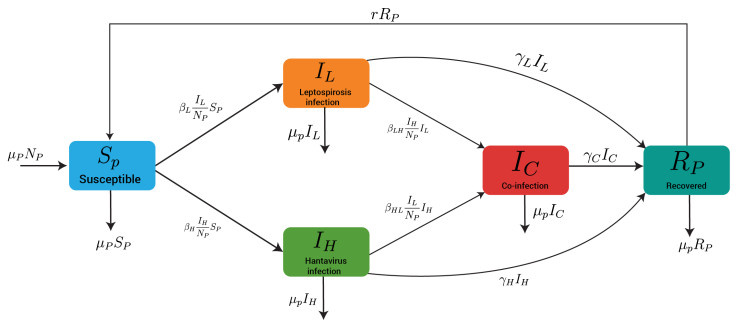
Figure 1.
Flow chart of the leptospirosis-hantavirus co-infection transmission model.
-
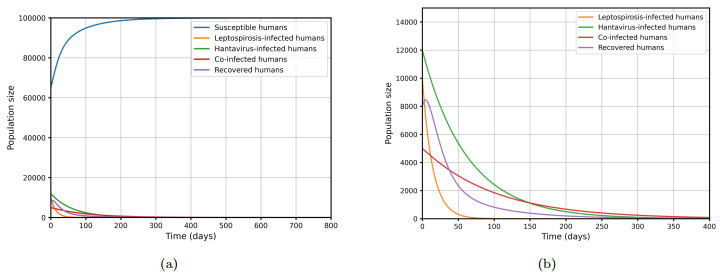
Figure 2.
Human population under
$ \mathcal{R}_0^c<1 $ -
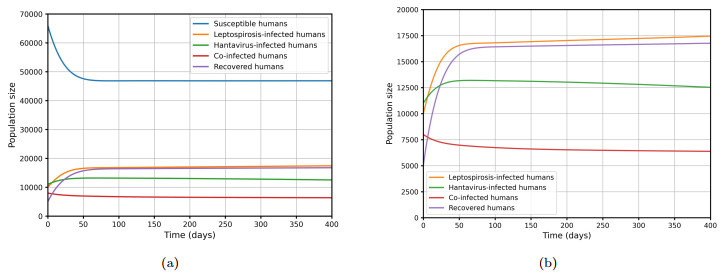
Figure 3.
Human population under
$ \mathcal{R}_0^c>1 $ -
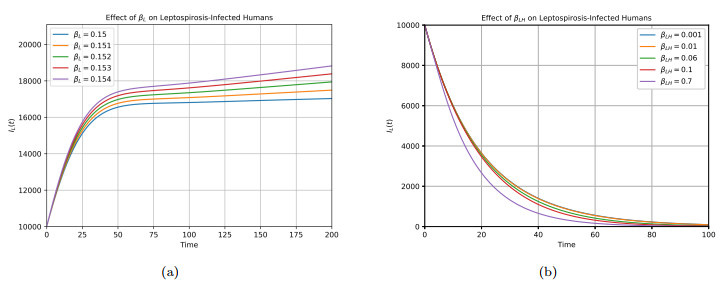
Figure 4.
Effect of
$ \beta_L $ $ \beta_{LH} $ -
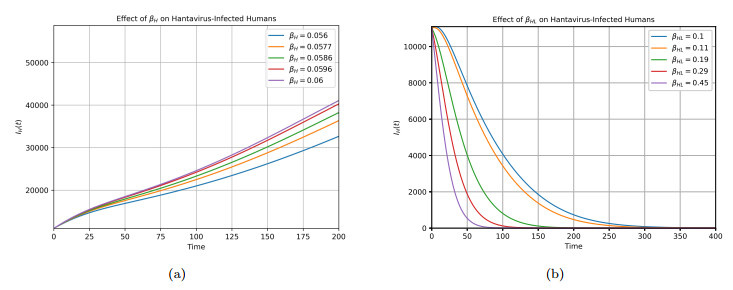
Figure 5.
Effect of
$ \beta_H $ $ \beta_{HL} $ -
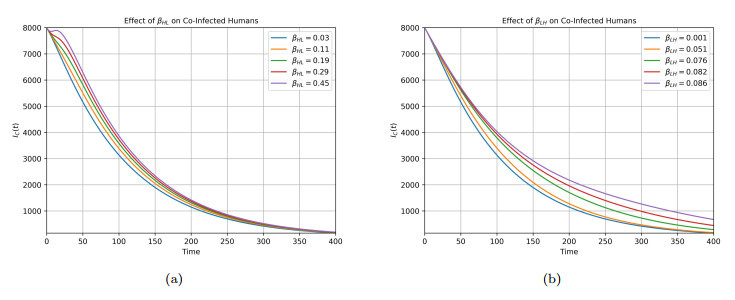
Figure 6.
Effect of
$ \beta_{HL} $ $ \beta_{LH} $ -
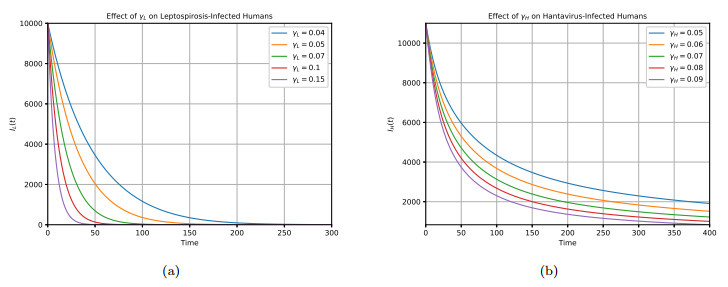
Figure 7.
Effect of
$ \gamma_L $ $ \gamma_H $ $ I_L $ $ I_H $ -
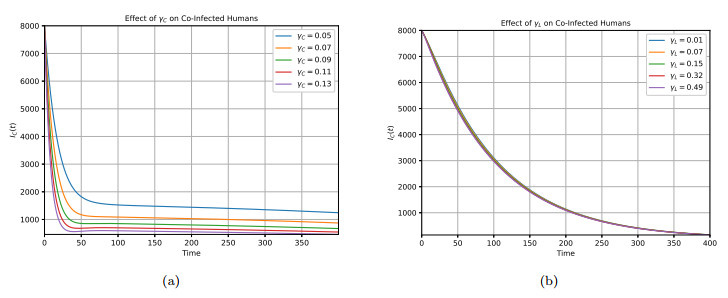
Figure 8.
Effect of
$ \gamma_C $ $ \gamma_L $ $ I_C $ $ I_L $