

| Citation: |
Shijing Si, Yijin Gao, Haixia Sun, Aifan Ling. SOLVING STOCHASTIC INVENTORY MODEL EQUATION WITH DEEP NEURAL NETWORKS[J]. Journal of Applied Analysis & Computation, 2026, 16(6): 2819-2840. doi: 10.11948/20250377

|
SOLVING STOCHASTIC INVENTORY MODEL EQUATION WITH DEEP NEURAL NETWORKS
-
Abstract
The joint optimization of dynamic pricing and inventory control in stochastic inventory systems has been extensively investigated in the previous literature before. A general common approach is to transform the dynamic system into a time-independent ordinary differential equation that represents the stable state. In this study, we extend the model to incorporate the general case with time-dependent dynamics. Consequently, the problem can be reformulated as solving a corresponding partial differential equation (PDE) that lacks an analytical solution. However, assuming an analytical solution encounters certain limitations: (1) Ensuring the accurate existence and uniqueness of the solution is challenging, and (2) completely solving the reduced ordinary differential equation system becomes difficult from theoretical sense. To address these challenges, efficient numerical methods are commonly employed. Nevertheless, for high-dimensional problems, numerical methods like finite element or finite difference methods tend to be computationally slow and suffer from accuracy loss. To overcome these issues, we propose the use of a deep learning technique named Physics-informed Neural Networks (PINN) to solve this complex system, which is the first application of PINN application in this research topic. Simulated examples are presented to validate the usefulness of PINN methods.
-

-
References
[1] A. G. Baydin, B. A. Pearlmutter, A. A. Radul and J. M. Siskind, Automatic differentiation in machine learning: A survey, Journal of Marchine Learning Research, 2018, 18, 1–43. [2] A. Bihlo, Improving physics-informed neural networks with meta-learned optimization, Journal of Machine Learning Research, 2024, 25(14), 1–26. [3] H. -J. Bungartz, A. Heinecke, D. Pflüger and S. Schraufstetter, Option pricing with a direct adaptive sparse grid approach, Journal of Computational and Applied Mathematics, 2012, 236(15), 3741–3750. doi: 10.1016/j.cam.2011.09.024 [4] Q. Cao, S. Goswami and G. E. Karniadakis, Laplace neural operator for solving differential equations, Nature Machine Intelligence, 2024, 6(6), 631–640. doi: 10.1038/s42256-024-00844-4 [5] Y. Chang and Y. Park, Optimal taxation with private insurance, The Review of Economic Studies, 2021, 88(6), 2766–2798. doi: 10.1093/restud/rdab003 [6] L. Feng and X. Lin, Pricing bermudan options in Lévy process models, SIAM Journal on Financial Mathematics, 2013, 4(1), 474–493. doi: 10.1137/120881063 [7] Y. Gao, Operator splitting method for the stochastic production-inventory model equation, Computers & Industrial Engineering, 2022, 108712. [8] K. He, X. Zhang, S. Ren and J. Sun, Deep residual learning for image recognition, in 2016 IEEE Conference on Computer Vision and Pattern Recognition (CVPR), 2016, 770–778. [9] K. Hornik, M. Stinchcombe and H. White, Multilayer feedforward networks are universal approximators, Neural Networks, 1989, 2(5), 359–366. doi: 10.1016/0893-6080(89)90020-8 [10] Z. Hu, K. Shukla, G. E. Karniadakis and K. Kawaguchi, Tackling the curse of dimensionality with physics-informed neural networks, Neural Networks, 2024, 176, 106369. doi: 10.1016/j.neunet.2024.106369 [11] S. Huang, W. Feng, C. Tang, et al., Partial differential equations meet deep neural networks: A survey, IEEE Transactions on Neural Networks and Learning Systems, 2025, 36(8), 13649–13669. doi: 10.1109/TNNLS.2025.3545967 [12] A. Iftakher, R. Golder, B. N. Roy and M. F. Hasan, Physics-informed neural networks with hard nonlinear equality and inequality constraints, Computers & Chemical Engineering, 2025, 109418. [13] M. K. Kadalbajoo, L. P. Tripathi and A. Kumar, Second order accurate imex methods for option pricing under merton and kou jump-diffusion models, Journal of Scientific Computing, 2015, 65(3), 979–1024. doi: 10.1007/s10915-015-0001-z [14] J. D. M. -W. C. Kenton and L. K. Toutanova, Bert: Pre-training of deep bidirectional transformers for language understanding, in Proceedings of NAACL-HLT, 2019, 4171–4186. [15] D. P. Kingma and J. Ba, Adam: A method for stochastic optimization, arXiv preprint. arXiv: 1412.6980, 2014. [16] E. Kiyani, K. Shukla, J. F. Urbán, et al., Optimizing the optimizer for physics-informed neural networks and kolmogorov-arnold networks, Computer Methods in Applied Mechanics and Engineering, 2025, 446, 118308. doi: 10.1016/j.cma.2025.118308 [17] Y. Kwon and Y. Lee, A second-order tridiagonal method for american options under jump-diffusion models, SIAM Journal on Scientific Computing, 2011, 33(4), 1860–1872. doi: 10.1137/100806552 [18] I. E. Lagaris, A. Likas and D. I. Fotiadis, Artificial neural networks for solving ordinary and partial differential equations, IEEE Trans. Neural Networks, 1998, 9(5), 987–1000. doi: 10.1109/72.712178 [19] Y. LeCun, Y. Bengio and G. Hinton, Deep learning, Nature, 2015, 521(7553), 436–444. doi: 10.1038/nature14539 [20] S. Li, J. Zhang and W. Tang, Joint dynamic pricing and inventory control policy for a stochastic inventory system with perishable products, International Journal of Production Research, 2015, 53(10), 2937–2950. doi: 10.1080/00207543.2014.961206 [21] L. Lu, X. Meng, Z. Mao and G. E. Karniadakis, Deepxde: A deep learning library for solving differential equations, SIAM Review, 2021, 63(1), 208–228. doi: 10.1137/19M1274067 [22] Y. Lu and J. Lu, A universal approximation theorem of deep neural networks for expressing probability distributions, Advances in Neural Information Processing Systems, 2020, 33, 3094–3105. [23] F. Naderi, I. Perez-Raya, S. Yadav, et al., Towards chemical source tracking and characterization using physics-informed neural networks, Atmospheric Environment, 2024, 334, 120679. doi: 10.1016/j.atmosenv.2024.120679 [24] K. Parand, A. A. Aghaei, S. Kiani, et al., A neural network approach for solving nonlinear differential equations of lane–emden type, Engineering with Computers, 2024, 40(2), 953–969. doi: 10.1007/s00366-023-01836-5 [25] A. Paszke, S. Gross, F. Massa, et al., Pytorch: An imperative style, high-performance deep learning library, Advances in Neural Information Processing Systems, 2019, 32. [26] M. Raissi, P. Perdikaris and G. E. Karniadakis, Physics-informed neural networks: A deep learning framework for solving forward and inverse problems involving nonlinear partial differential equations, Journal of Computational Physics, 2019, 378, 686–707. doi: 10.1016/j.jcp.2018.10.045 [27] M. Raissi, A. Yazdani and G. E. Karniadakis, Hidden fluid mechanics: Learning velocity and pressure fields from flow visualizations, Science, 2020, 367(6481), 1026–1030. doi: 10.1126/science.aaw4741 [28] D. Sachs, A. Tsyvinski and N. Werquin, Nonlinear tax incidence and optimal taxation in general equilibrium, Econometrica, 2020, 88(2), 469–493. doi: 10.3982/ECTA14681 [29] G. Strang, On the construction and comparison of difference schemes, SIAM Journal on Numerical Analysis, 1968, 5(3), 506–517. doi: 10.1137/0705041 [30] J. Toivanen, A high-order front-tracking finite difference method for pricing american options under jump-diffusion models, The Journal of Computational Finance, 2010, 13(3), 61. doi: 10.21314/JCF.2010.222 [31] W. Wang, Y. Chen and H. Fang, On the variable two-step IMEX BDF method for parabolic integro-differential equations with nonsmooth initial data arising in finance, SIAM Journal on Numerical Analysis, 2019, 57(3), 1289–1317. doi: 10.1137/18M1194328 -
-
Figures(16) / Tables(8)

Export File
Citation
Shijing Si, Yijin Gao, Haixia Sun, Aifan Ling. SOLVING STOCHASTIC INVENTORY MODEL EQUATION WITH DEEP NEURAL NETWORKS[J]. Journal of Applied Analysis & Computation, 2026, 16(6): 2819-2840. doi: 10.11948/20250377
Format
Content
 DownLoad:
-
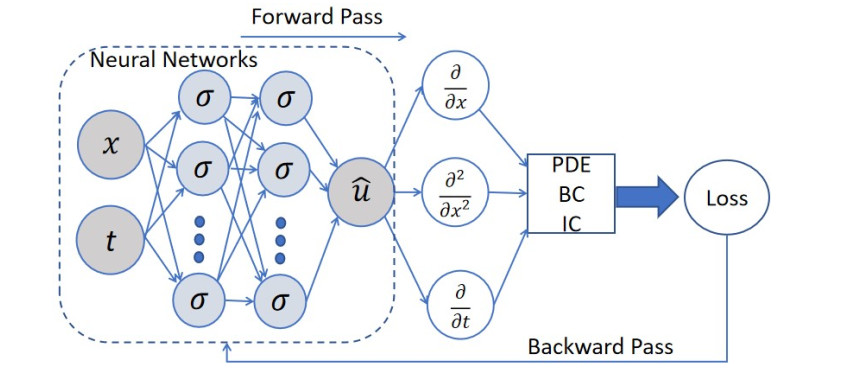
Figure 1.
Schematic of a PINN for solving the PDE in Eq. (3.1) with boundary (BC) and initial conditions (IC).
-
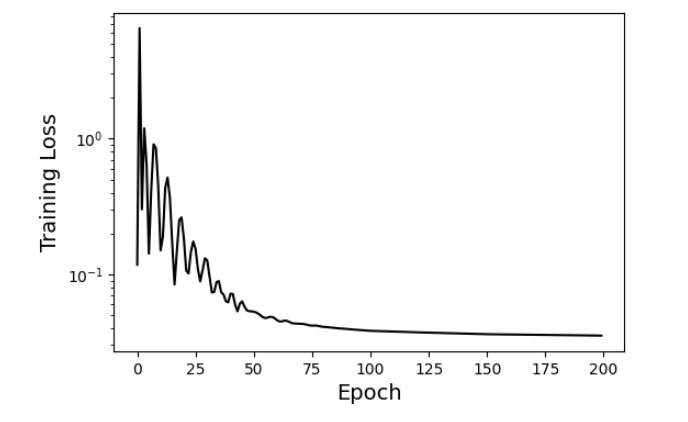
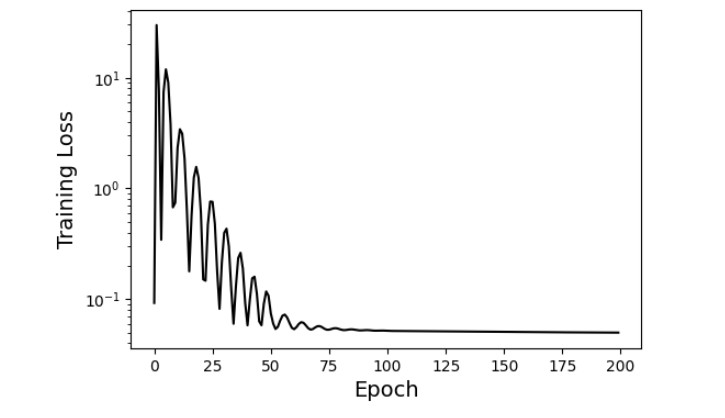
Figure 2.
Initial value is
$ x $ -
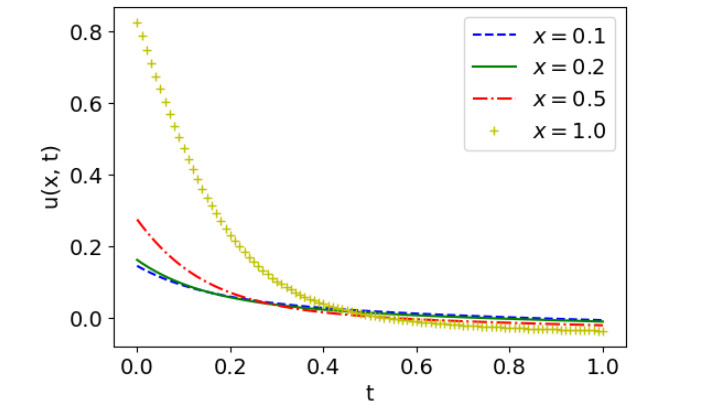
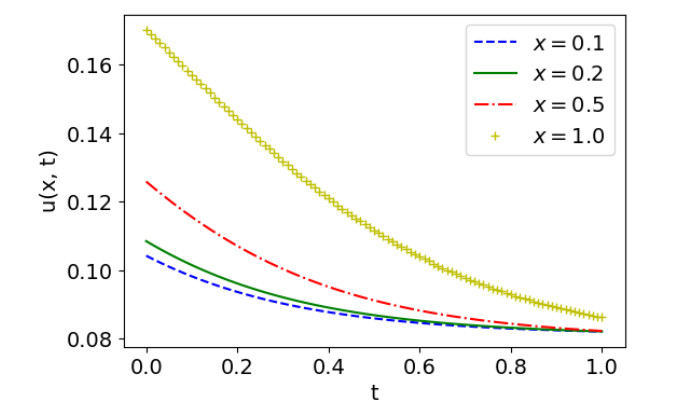
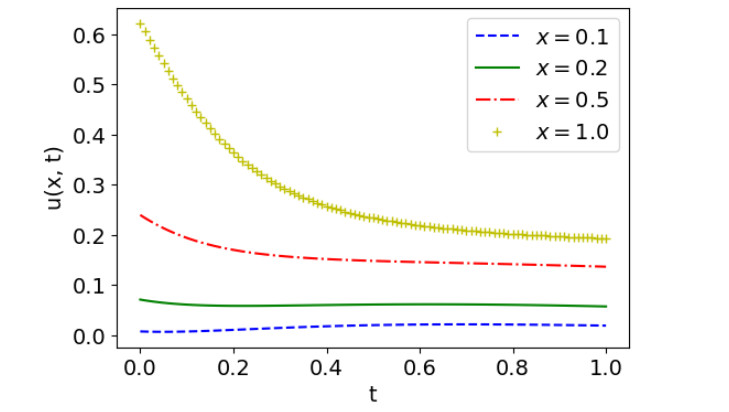
Figure 3.
Initial value is
$ x $ $ u(x, t) $ $ t $ -
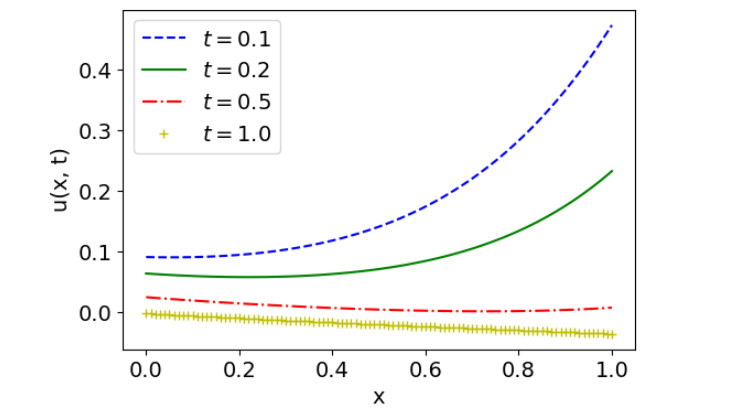
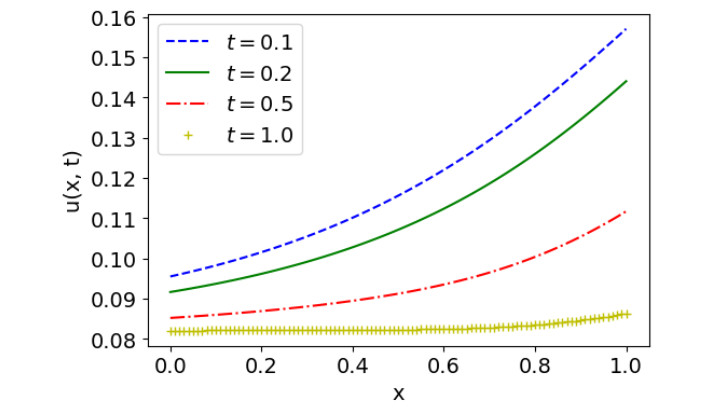
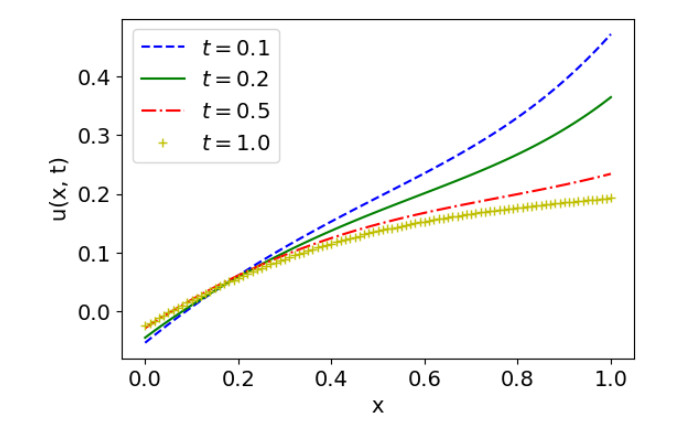
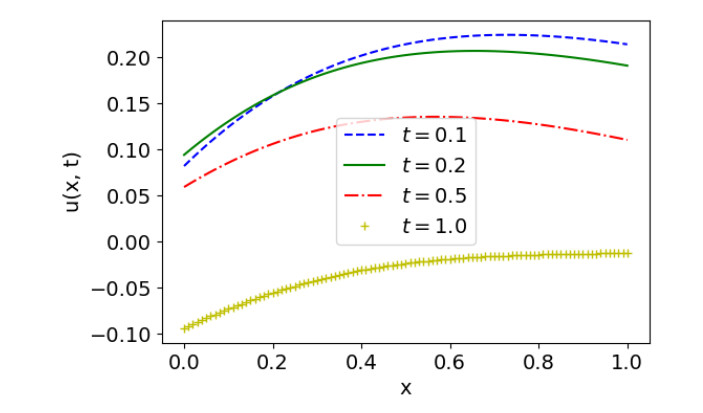
Figure 4.
Initial value is
$ x $ $ u(x, t) $ $ x $ -
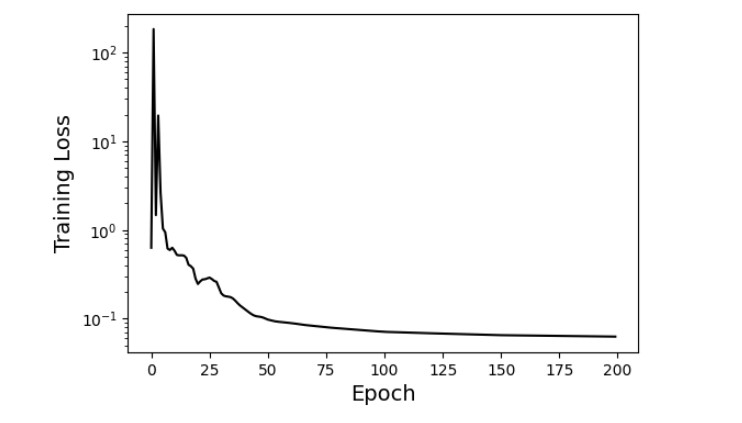
Figure 5.
When the initial value is
$ x^2 $ -
Figure 6.
Initial value is
$ x^2 $ $ u(x, t) $ $ t $ -
Figure 7.
Initial value is
$ x^2 $ $ u(x, t) $ $ x $ -
Figure 8.
Initial value is
$ x $ -
Figure 9.
Initial value is
$ x $ $ u(x, t) $ $ t $ -
Figure 10.
Initial value is
$ x $ $ u(x, t) $ $ x $ -
Figure 11.
Initial value is
$ x^2 $ -
Figure 12.
Initial value is
$ x^2 $ $ u(x, t) $ $ t $ -
Figure 13.
Initial value is
$ x^2 $ $ u(x, t) $ $ x $ -
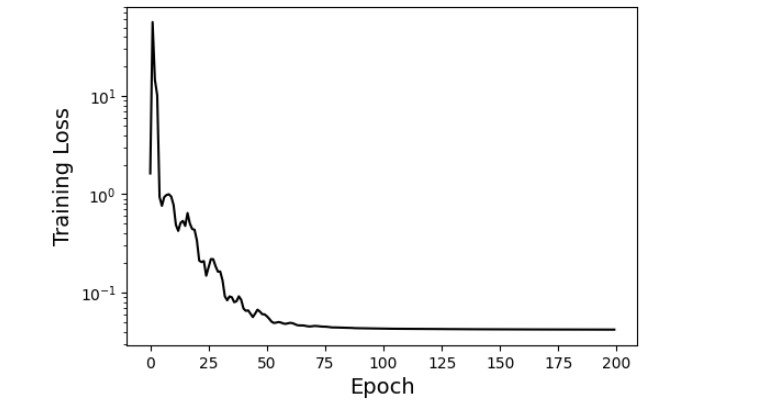
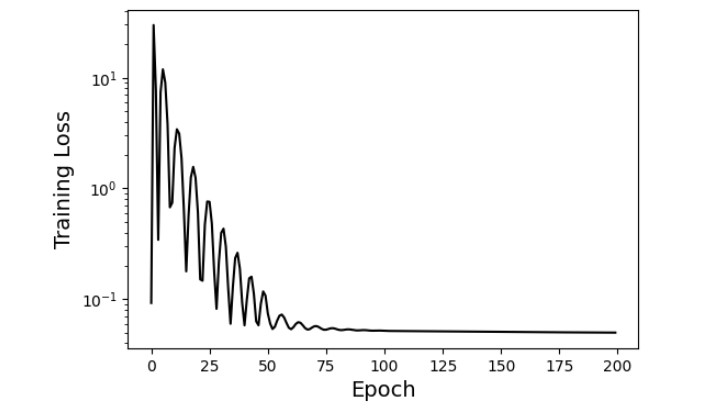
Figure 14.
Loss function with
$ x_{\max}=2 $ -
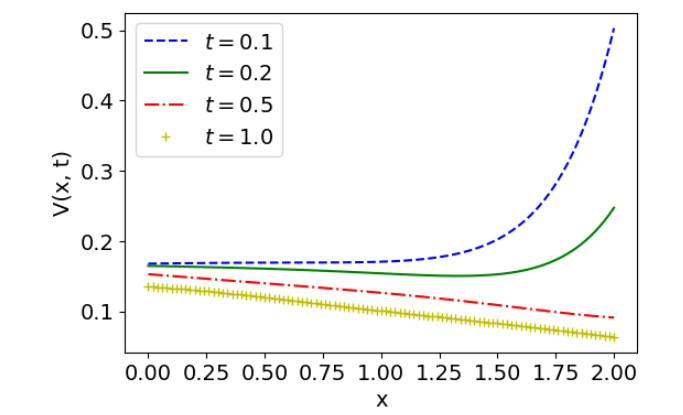
Figure 15.
$ u(x, t) $ $ x_{\max}=2 $ $ x $ -
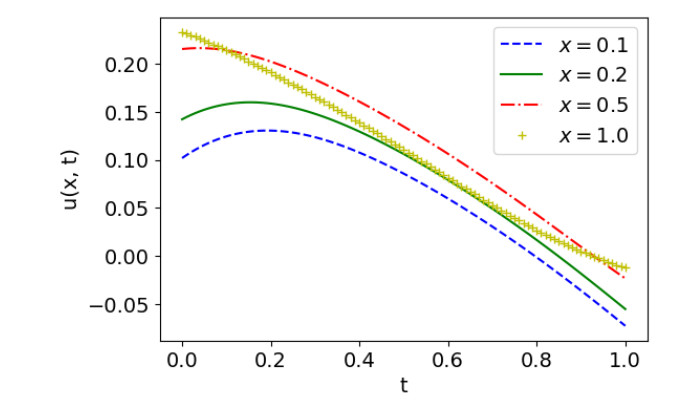
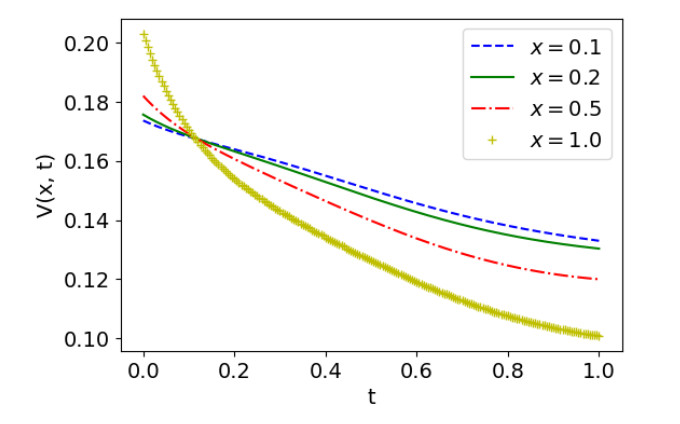
Figure 16.
$ u(x, t) $ $ x_{\max}=2 $ $ t $