

| Citation: |
Kottakkaran Sooppy Nisar, Muhammad Farman. COMPREHENSIVE FRAMEWORK FOR EYE INFECTIONS IN COMMUNITY UNDER PREVENTIVE AND TREATMENT WITH FRACTIONAL ORDER STUDY[J]. Journal of Applied Analysis & Computation, 2026, 16(6): 2913-2944. doi: 10.11948/20250322

|
COMPREHENSIVE FRAMEWORK FOR EYE INFECTIONS IN COMMUNITY UNDER PREVENTIVE AND TREATMENT WITH FRACTIONAL ORDER STUDY
-
Abstract
Environmental biopollutants and airborne contaminants contribute to eye infection diseases through prolonged exposure. Despite natural protections, some microorganisms can infect the eyes. This study develops a fractional-order mathematical model analyzing the transmission dynamics of environmentally induced eye infections, incorporating biopollutant exposure and air quality effects. The model uses a generalized fractional derivative to account for memory and hereditary effects from cumulative exposure and delayed immune responses of the ocular system. We verified that a single solution with a positively invariant region exists. The Banach fixed point theorem and Krasnoselskii type are used to investigate the existence and uniqueness of the eye infection model. It highlights local stability while accounting for limiting observations, a critical component of epidemic models. The reproductive number $\mathcal{R}_0$ is calculated to evaluate its impact on compartments and community-wide transmission rates. A sensitivity study of the model's parameters is used to investigate its behavior. We used the linear feedback control technique to stabilize the system and also verified the local and global stability of equilibria. The study conducted numerical replications for a range of outcomes in order to demonstrate the efficacy of fractional coupled differential equations in modeling ocular infections, producing evidence that is compatible with theoretical conclusions. This study advances knowledge of eye infections and the creation of sensible preventative measures.
-

-
References
[1] N. Ahmad, S. Ahmad and P. Pongsumpun, Modeling of eye infection transmitting by conjunctivitis adenovirus: Deterministic and stochastic approach, Eur. J. Pure Appl. Math., 2025, 18(4), 6354–6354. doi: 10.29020/nybg.ejpam.v18i4.6364 [2] R. M. Anderson and R. M. May, Infectious Diseases of Humans: Dynamics and Control, Oxford University Press, Oxford, 1991. [3] R. A. Armstrong, The microbiology of the eye, Ophthalmic Physiol. Opt., 2000, 20(6), 429–441. doi: 10.1111/j.1475-1313.2000.tb01121.x [4] A. Atangana, Mathematical model of survival of fractional calculus, critics and their impact: How singular is our world?, Adv. Differ. Equ., 2021, 2021(1), 403. doi: 10.1186/s13662-021-03494-7 [5] A. Atangana, Fractal-fractional differentiation and integration: Connecting fractal calculus and fractional calculus to predict complex system, Chaos Solitons Fractals, 2017, 102, 396–406. doi: 10.1016/j.chaos.2017.04.027 [6] A. Bialasiewicz, R. Brehler, J. Draeger and H. Schmitz, Mathematical modelling of epidemics under specific regard of adenoviral keratoconjunctivitis, Eur. J. Med. Res., 2008, 13(8), 355–365. [7] F. Brauer, C. Castillo-Chavez and Z. Feng, Mathematical Models in Epidemiology, Springer, New York, 2019. [8] M. J. Burton, J. Ramke, A. P. Marques, R. R. Bourne, N. Congdon, I. Jones, et al., The lancet global health commission on global eye health: Vision beyond 2020, Lancet Glob. Health, 2021, 9(4), e489–e551. doi: 10.1016/S2214-109X(20)30488-5 [9] A. I. K. Butt, Modeling, analysis, and optimal control of conjunctivitis epidemics, J. Appl. Math. Comput., 2026, 72(1), 50. doi: 10.1007/s12190-025-02706-7 [10] G. Clare, J. H. Kempen and C. Pavésio, Infectious eye disease in the 21st century-an overview, Eye, 2024, 1–14. [11] H. Cronau, R. R. Kankanala and T. Mauger, Diagnosis and management of red eye in primary care, Am. Fam. Physician, 2010, 81(2), 137–144. [12] E. T. Cunningham Jr, J. V. Forrester, N. A. Rao and M. Zierhut, Post-infectious uveitis, Ocul. Immunol. Inflamm., 2016, 24(6), 603–606. doi: 10.1080/09273948.2016.1253983 [13] K. Diethelm, The Analysis of Fractional Differential Equations: An Application-Oriented Exposition Using Differential Operators of Caputo Type, Springer, 2010. [14] K. Diethelm and N. J. Ford, Analysis of fractional differential equations, J. Math. Anal. Appl., 2002, 265(2), 229–248. doi: 10.1006/jmaa.2000.7194 [15] K. Dietz, The estimation of the basic reproduction number for infectious diseases, Stat. Methods Med. Res., 1993, 2(1), 23–41. doi: 10.1177/096228029300200103 [16] M. Farman, C. Xu, A. Shehzad and A. Akgül, Modeling and dynamics of measles via fractional differential operator of singular and non-singular kernels, Math. Comput. Simul., 2024, 221, 461–488. doi: 10.1016/j.matcom.2024.03.019 [17] H. W. Hethcote, The mathematics of infectious diseases, SIAM Rev., 2000, 42(4), 599–653. doi: 10.1137/S0036144500371907 [18] F. Hu, Q. Ma, H. Hu, K. H. Zhou and S. Wei, A study of the spatial network structure of ethnic regions in Northwest China based on multiple factor flows in the context of COVID-19: Evidence from Ningxia, Heliyon, 2024, 10(2). [19] Z. Iqbal, J. E. Macías-Díaz, N. Ahmed, A. Javaid, M. Rafiq and A. Raza, Analytical and numerical boundedness of a model with memory effects for the spreading of infectious diseases, Symmetry, 2022, 14(12), 2540. doi: 10.3390/sym14122540 [20] F. Javed, A. Ahmad, A. H. Ali, E. Hincal and A. Amjad, Investigation of conjunctivitis adenovirus spread in human eyes by using bifurcation tool and numerical treatment approach, Phys. Scr., 2024, 99(8), 085253. doi: 10.1088/1402-4896/ad62a5 [21] F. Javed, A. Ahmad, A. H. Ali, E. Hincal and A. Amjad, Investigation of conjunctivitis adenovirus spread in human eyes by using bifurcation tool and numerical treatment approach, Phys. Scr., 2024, 99(8), 085253. doi: 10.1088/1402-4896/ad62a5 [22] M. B. Jeelani and N. H. Alharthi, On a symmetry-based structural deterministic fractal fractional order mathematical model to investigate conjunctivitis adenovirus disease, Symmetry, 2024, 16(10), 1284. doi: 10.3390/sym16101284 [23] H. Khan, J. Alzabut, A. Shah, Z. Y. He, S. Etemad, S. Rezapour and A. Zada, On fractal-fractional waterborne disease model: A study on theoretical and numerical aspects of solutions via simulations, Fractals, 2023, 31(04), 2340055. doi: 10.1142/S0218348X23400558 [24] A. Korobeinikov and P. K. Maini, Non-linear incidence and stability of infectious disease models, Math. Med. Biol., 2005, 22(2), 113–128. doi: 10.1093/imammb/dqi001 [25] S. N. Kyere, F. A. Boateng, G. F. Hoggar and P. Jonathan, Optimal control model of haemorrhagic conjunctivitis disease, Adv. Comput. Sci., 2018, 1(2), 108. [26] M. Y. Li and J. S. Muldowney, Global stability for the SEIR model in epidemiology, Math. Biosci., 1995, 125(2), 155–164. doi: 10.1016/0025-5564(95)92756-5 [27] S. Mangal, E. Bonyah, V. S. Sharma and Y. Yuan, A novel fractional-order stochastic epidemic model to analyze the role of media awareness in the spread of conjunctivitis, Healthc. Anal., 2024, 5, 100302. doi: 10.1016/j.health.2024.100302 [28] J. Mossong, N. Hens, M. Jit, P. Beutels, K. Auranen, R. Mikolajczyk, et al., Social contacts and mixing patterns relevant to the spread of infectious diseases, PLoS Med., 2008, 5(3), e74. doi: 10.1371/journal.pmed.0050074 [29] M. K. Naik, C. Baishya, P. Veeresha and D. Baleanu, Design of a fractional-order atmospheric model via a class of ACT-like chaotic system and its sliding mode chaos control, Chaos, 2023, 33(2). [30] P. A. Naik, A. Zehra, M. Farman, A. Shehzad, S. Shahzeen and Z. Huang, Forecasting and dynamical modeling of reversible enzymatic reactions with a hybrid proportional fractional derivative, Front. Phys., 2024, 11, 1307307. doi: 10.3389/fphy.2023.1307307 [31] K. S. Nisar, A. Ahmad, M. Farman, E. Hincal and A. Zehra, Modeling and mathematical analysis of fractional order eye infection (conjunctivitis) virus model with treatment impact: Prelicence and dynamical transmission, Alex. Eng. J., 2024, 107, 33–46. doi: 10.1016/j.aej.2024.07.020 [32] K. S. Nisar and M. Farman, Analysis of a mathematical model with hybrid fractional derivatives under different kernel for hearing loss due to mumps virus, Int. J. Model. Simul., 2024, 1–27. [33] K. S. Nisar, M. Farman, A. Zehra and E. Hincal, Numerical and analytical study of fractional order tumor model through modeling with treatment of chemotherapy, Int. J. Model. Simul., 2024, 1–14. [34] M. O. Olayiwola, A. I. Alaje and A. O. Yunus, A Caputo fractional order financial mathematical model analyzing the impact of an adaptive minimum interest rate and maximum investment demand, Results Control Optim., 2024, 14, 100349. doi: 10.1016/j.rico.2023.100349 [35] J. Pan, Y. Deng, Y. Yang and Y. Zhang, Location-allocation modelling for rational health planning: Applying a two-step optimization approach to evaluate the spatial accessibility improvement of newly added tertiary hospitals in a metropolitan city of China, Soc. Sci. Med., 2023, 338, 116296. doi: 10.1016/j.socscimed.2023.116296 [36] M. W. Rasheed, A. Mahboob and I. Hanif, On QSAR modeling with novel degree-based indices and thermodynamics properties of eye infection therapeutics, Front. Chem., 2024, 12, 1383206. doi: 10.3389/fchem.2024.1383206 [37] S. Rezapour, S. Etemad, J. K. K. Asamoah, H. Ahmad and K. Nonlaopon, A mathematical approach for studying the fractal-fractional hybrid Mittag-Leffler model of malaria under some control factors, AIMS Math, 2023, 8(2), 3120–3162. doi: 10.3934/math.2023161 [38] D. K. Sahu, D. Pradhan, J. Halder, P. Biswasroy, B. Kar, G. Ghosh and G. Rath, Design and optimization of gatifloxacin loaded polyvinyl alcohol nanofiber for the treatment of dry eye infection: In vitro and in vivo evaluation, J. Drug Deliv. Sci. Technol., 2022, 76, 103651. doi: 10.1016/j.jddst.2022.103651 [39] K. Shah, K. U. Rehman, B. Abdalla, T. Abdeljawad and W. Shatanawi, Using neural network and fractals fractional analysis to predict the eye disease infection caused by conjunctivitis virus, Fractals, 2025, 2540204. [40] S. Sharma, Diagnosis of infectious diseases of the eye, Eye, 2012, 26(2), 177–184. [41] M. Sher, K. Shah, Z. A. Khan, H. Khan and A. Khan, Computational and theoretical modeling of the transmission dynamics of novel COVID-19 under Mittag-Leffler power law, Alex. Eng. J., 2020, 59(5), 3133–3147. [42] C. I. Siettos and L. Russo, Mathematical modeling of infectious disease dynamics, Virulence, 2013, 4(4), 295–306. doi: 10.4161/viru.24041 [43] H. Sun, Y. Zhang, D. Baleanu, W. Chen and Y. Chen, A new collection of real world applications of fractional calculus in science and engineering, Commun. Nonlinear Sci. Numer. Simul., 2018, 64, 213–231. doi: 10.1016/j.cnsns.2018.04.019 [44] L. Tang, Y. Chen, Q. Xiang, J. Xiang, Y. Tang and J. Li, The association between IL18, FOXP3 and IL13 genes polymorphisms and risk of allergic rhinitis: A meta-analysis, Inflamm. Res., 2020, 69(9), 911–923. [45] X. Tang, L. Cai, Y. Meng, J. Xu, C. Lu and J. Yang, Indicator regularized non-negative matrix factorization method-based drug repurposing for COVID-19, Front. Immunol., 2021, 11, 603615. [46] J. P. Ugarte and C. Tobón, Fractional-order modeling of myocardium structure effects on atrial fibrillation electrograms, Math. Biosci., 2024, 378, 109331. doi: 10.1016/j.mbs.2024.109331 [47] S. Watson, M. Cabrera-Aguas and P. Khoo, Common eye infections, Aust. Prescr., 2018, 41(3), 67. [48] Z. Wu, W. Sun, B. He and C. Wang, Clinical characteristics, treatment, and outcomes of nivolumab-induced uveitis, Immunopharmacol. Immunotoxicol., 2025, 47(2), 222–227. doi: 10.1080/08923973.2025.2461056 [49] S. Yan, D. Jiang, Y. Cui, H. Zhang, L. Li and J. Jiang, A fractional-order hyperchaotic system that is period in integer-order case and its application in a novel high-quality color image encryption algorithm, Chaos Solitons Fractals, 2024, 182, 114793. [50] S. W. Yao, A. Ahmad, M. Inç, M. Farman, A. Ghaffar and A. Akgül, Analysis of fractional order diarrhea model using fractal fractional operator, Fractals, 2022, 30(05), 2240173. [51] Y. Ye, Y. Lu, H. Su, Y. Tian, S. Jin, G. Li, Y. Yang, L. Jiang, Z. Zhou, X. Wei and T. H. Tao, A hybrid bioelectronic retina-probe interface for object recognition, Biosens. Bioelectron., 2025, 279, 117408. -
-
Figures(15) / Tables(1)

Export File
Citation
Kottakkaran Sooppy Nisar, Muhammad Farman. COMPREHENSIVE FRAMEWORK FOR EYE INFECTIONS IN COMMUNITY UNDER PREVENTIVE AND TREATMENT WITH FRACTIONAL ORDER STUDY[J]. Journal of Applied Analysis & Computation, 2026, 16(6): 2913-2944. doi: 10.11948/20250322
Format
Content
 DownLoad:
-
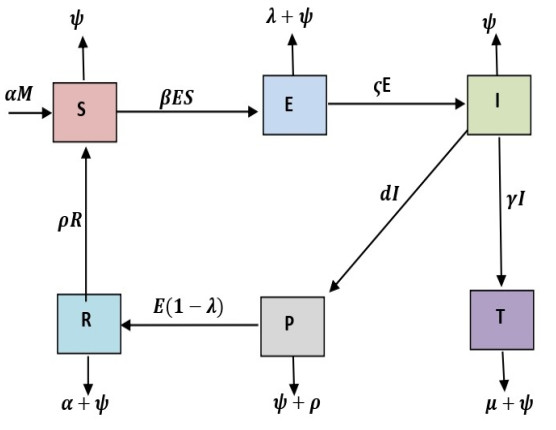
Figure 1.
Schematic representation of the proposed model.
-
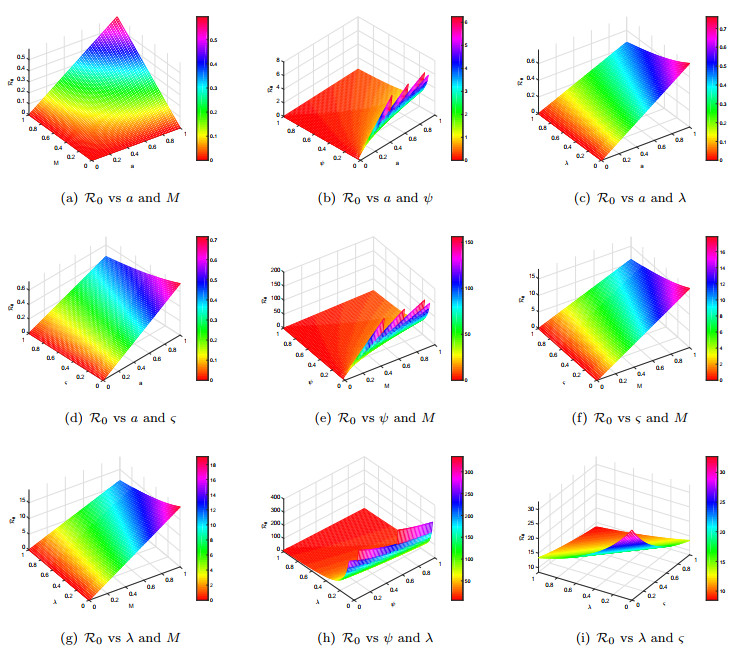
Figure 2.
Analysis of reproductive number's variations to different parameters.
-
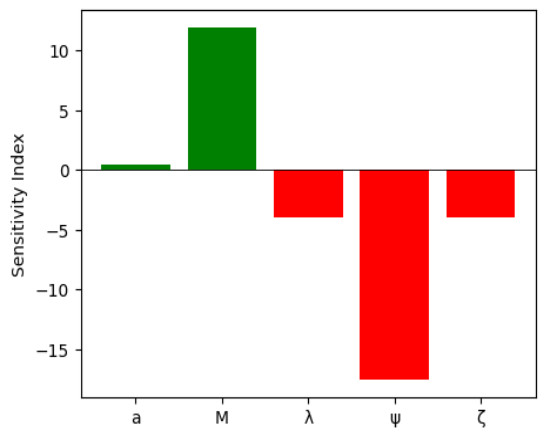
Figure 3.
Impact of parameter variations on
$ \mathcal{R}_0 $ -
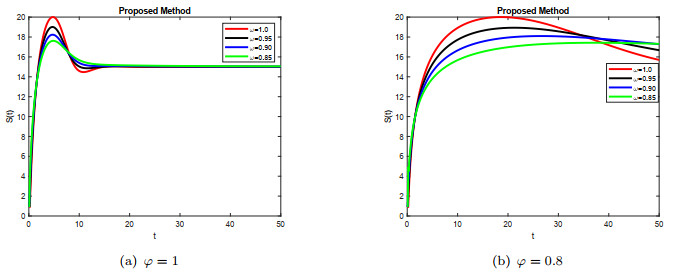
Figure 4.
$ S(t) $ -
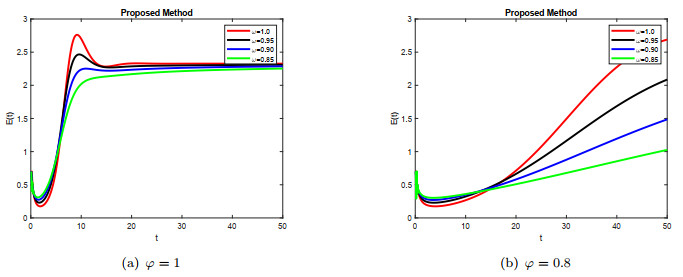
Figure 5.
$ E(t) $ -
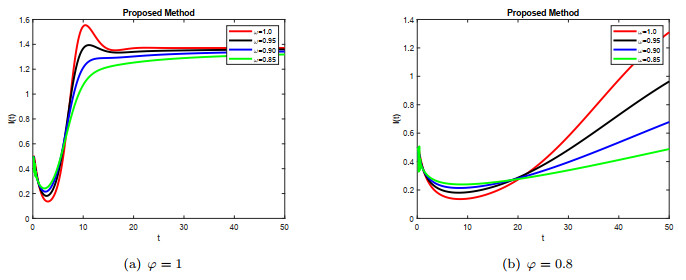
Figure 6.
$ I(t) $ -
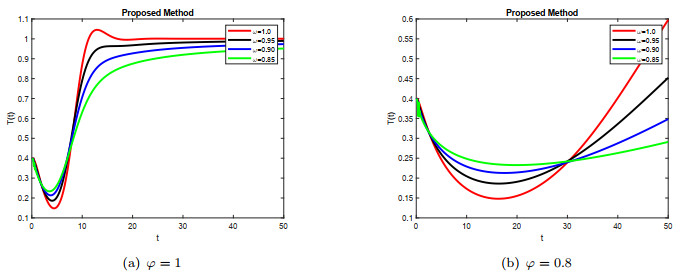
Figure 7.
$ T(t) $ -
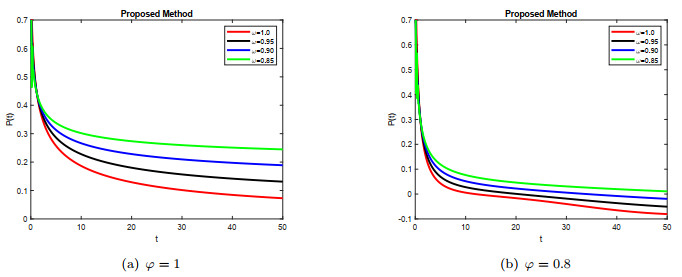
Figure 8.
$ P(t) $ -
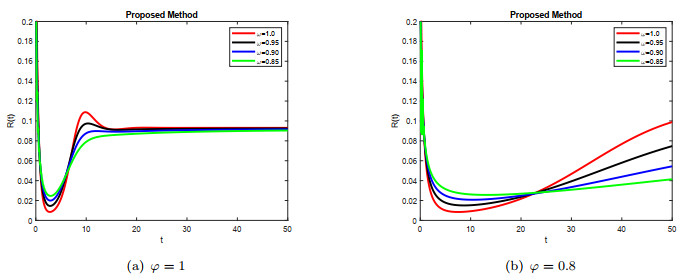
Figure 9.
$ R(t) $ -
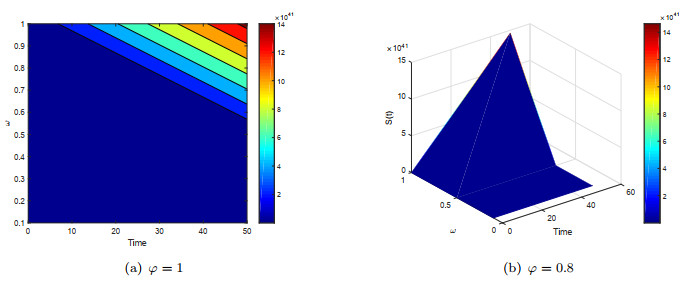
Figure 10.
Surface plots of
$ S(t) $ -
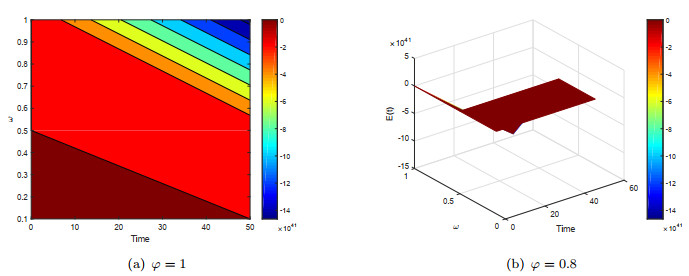
Figure 11.
Surface plots of
$ E(t) $ -
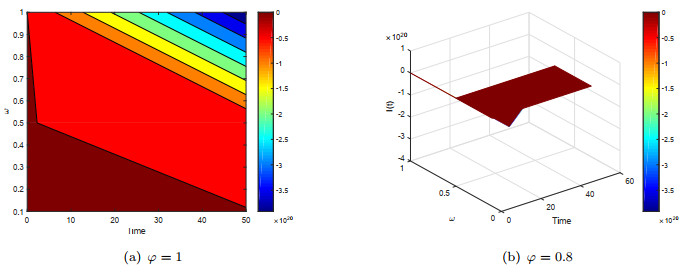
Figure 12.
Surface plots of
$ I(t) $ -
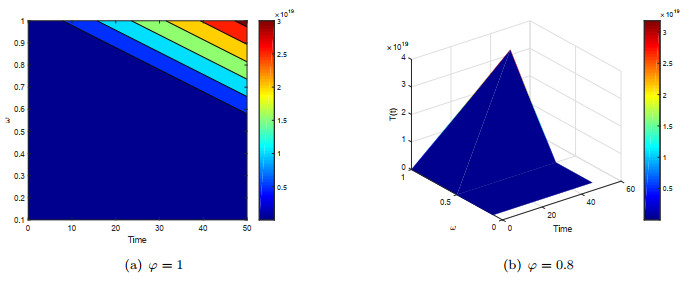
Figure 13.
Surface plots of
$ T(t) $ -
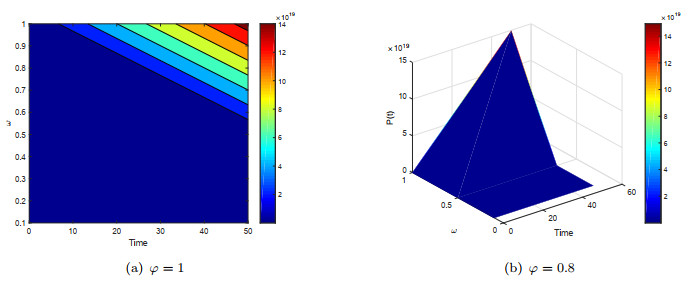
Figure 14.
Surface plots of
$ P(t) $ -
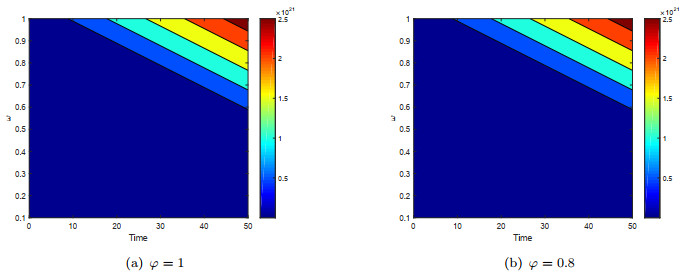
Figure 15.
Surface plots of
$ R(t) $