

| Citation: |
Renxiang Shi. THE INFLUENCE OF DELAYS AND INJECTION TREATMENTS ON THE DYNAMICS OF TUMOR-IMMUNE SYSTEM[J]. Journal of Applied Analysis & Computation, 2027, 17(2): 1312-1350. doi: 10.11948/20260107

|
THE INFLUENCE OF DELAYS AND INJECTION TREATMENTS ON THE DYNAMICS OF TUMOR-IMMUNE SYSTEM
-
Abstract
We propose a tumor-CD4+-cytokine-host system with two delays and injection treatments, where two delays denote activation delays for CD4+ T cells and cytokines respectively and host cells compete with tumor cells. First we prove the positivity and boundedness of solutions without injection treatments, the positivity means that tumor cells always exist, the boundedness means that immune cells can control the increase of tumor cells, then we discuss the influence of two delays on the dynamics of system, that is as any of the delays is sufficiently small, the corresponding interior positive equilibrium point is locally stable, as the delay increases to critical value, Hopf bifurcation occurs and periodic solution bifurcates from the equilibrium point, which means the relapse of tumor cells occurs, furthermore base on center manifold and normal form, we study the property of Hopf bifurcation, at last, in absence of delay, we study the influence of relative parameters on the volume of tumor cells and feasibility of injection treatments of CD4+ T cells and cytokines on eradication of tumor cells, that is the tumor cells can be eradicated if the dose of injection treatment of CD4+ T cells or cytokines is sufficiently large. All the results are supported by simulations.
-
Keywords:
- Immunotherapy /
- tumor-immune-host system /
- delays /
- Hopf bifurcation /
- stability /
- cytokine
-

-
References
[1] R. Amin and P. Yu, Dynamical analysis of a tumor model with immunotherapy treatment, Chaos Sol. Fract., 2026, 202, 117607. doi: 10.1016/j.chaos.2025.117607 [2] L. Anderson, S. Jang and J.-L. Yu, Qualitative behavior of system of tumor-CD4+-cytokine interactions with treatments, Math. Meth. Appl. Sci., 2015, 38(17), 4330–4344. doi: 10.1002/mma.3370 [3] J. C. Arciero, T. L. Jackson and D. E. Kirschner, A mathematical model of tumor-immune evasion and siRNA treatment, Dis. Con. Dyn, Sys. Ser.-B, 2004, 4(1), 39–58. doi: 10.3934/dcdsb.2004.4.39 [4] K. Dehingia, P. Das, R. K. Upadhyay, A. K. Misra, F. A. Rihan and K. Hosseini, Modelling and analysis of delayed tumor-immune system with hunting T-cells, Math. Compu. Simu., 2023, 203, 669–684. doi: 10.1016/j.matcom.2022.07.009 [5] A. Perez-Diez, N. T. Joncker, K. Choi, W. F. N. Chan, C. C. Anderson, O. Lantz and P. Matzinger, CD4 cells can be more efficient at tumor rejection than CD8 cells, Blood, 2007, 109, 5346–5354. doi: 10.1182/blood-2006-10-051318 [6] Y. Dong, G. Huang, R. Miyazaki and Y. Takeuchi, Dynamics in a tumor immune system with time delays, Appl. Math. Compu., 2015, 252, 99–113. [7] R. Eftimie, J. L. Bramson and D. J. D. Earn, Interaction between the immune system and cancer: A brief review of non-spatial mathematical model, Bull. Math. Biol., 2011, 73, 2–32. doi: 10.1007/s11538-010-9526-3 [8] R. Eftimie, J. L. Bramson and D. J. D. Earn, Modeling anti-tumor Th1 and Th2 immunity in the rejection of melanoma, J. Theor. Biol., 2010, 265(3), 467–480. doi: 10.1016/j.jtbi.2010.04.030 [9] Y. Fujita, Flower power as human cancer cells compete with normal cells, Nature, 2019, 572, 181–182. doi: 10.1038/d41586-019-02161-y [10] D. Hanahan and R. A. Weinberg, The Hallmarks of cancer, Cell, 2000, 100, 57–70. doi: 10.1016/S0092-8674(00)81683-9 [11] B. Hassard, N. Kazarinof and Y. Wan, Theory and Application of Hopf Bifurcation, Cambridge University Press, Cambridge, 1981. [12] F. He, H. Zhu, J. Lin and Y. Ou, Global dynamics of a tumor-immune model with an immune checkpoint inhibitor, Int. J. Biomath, 2023, 2350048, 1–24. [13] X. Hu and S. R.-J. Jang, Dynamics of tumor-CD4+-cytokine-host cells interactions with treatments, Appl. Math. Compu., 2018, 321, 700–720. [14] S. Khajanchi, The impact of immunotherapy on a glioma immune interaction model, Chaos Sol. Fract., 2021, 152, 111346. doi: 10.1016/j.chaos.2021.111346 [15] S. Khajanchi, S. Bera and T. K. Kar, An Optimal Control Problem for HTLV-Ⅰ Infection Model, Opt. Con. Appl. Method., 2025, 46(2), 798–810. doi: 10.1002/oca.3232 [16] S. Khajanchi, J. Mondal and P. K. Tiwari, Optimal treatment strategies using dendritic cell vaccination for a tumor model with parameter identifiability, J. Bio. Systems, 2023, 31(2), 487–516. doi: 10.1142/S0218339023500171 [17] S. Khajanchi and J. J. Nieto, Spatiotemporal dynamics of a glioma immune interaction model, Sci. Reports, 2021, 11, 22385. [18] D. Kirschner and J. C. Panetta, Modeling immunotherapy of the tumor-immune interaction, J. Math. Biol., 1998, 37, 235–252. doi: 10.1007/s002850050127 [19] J. Li, Y. Chen, H. Cao, D. Zhang and P. Zhang, A simple model of Tumor-Immune interaction: The effect of antigen delay, Int. J. Bifur. Chaos, 2023, 33(11), 2350129, 1–20. doi: 10.1142/S0218127423501298 [20] J. Li, F. Liu, Y. Chen and D. Zhang, Dynamical analysis of a model on tumor-immune system with regulation of PD-1/PD-L1 and stimulation delay of tumor antigen, Qua. Theo. Dyn. Systems, 2022, 21(90), 1–32. [21] J. Li and X. Ma, Complex dynamic behaviors of a tumor-immune system with two delays in tumor actions, Dis. Con. Dyn. Sys. Ser.-B, 2022, 27(12), 7065–7087. doi: 10.3934/dcdsb.2022033 [22] A. G. Lopez, J. M. Seoane and M. A. F. Sanjuan, A validated mathematical model of tumor growth including tumor-host interaction, cell-mediated immune response and chemotherapy, Bull. Math. Biol., 2014, 76, 2884–2906. doi: 10.1007/s11538-014-0037-5 [23] W. Mari, How normal cells can win the battle for survival against cancer cells, Plos, Biol., 2010, 8(7), e1000423. doi: 10.1371/journal.pbio.1000423 [24] T. Maruyama and Y. Fujita, Cell competition in mammals-novel homeostatic machinery for embryonic development and cancer prevention, Curr. Opin. Cell Biol., 2017, 48, 106–112. doi: 10.1016/j.ceb.2017.06.007 [25] J. Mattes, M. Hulett, W. Xie, S. Hogan, M. E. Rothenberg, P. Foster and C. Parish, Immunotherapy of cytotoxic T cell-resistant tumors by T helper 2 cells: An eotaxin and STAT6-dependent process, J. Exp. Med., 2003, 197, 387–393. doi: 10.1084/jem.20021683 [26] L. G. de Pillis and A. Radunskaya, The dynamics of an optimally controlled tumor model: A case study, Math. Com. Model., 2003, 37, 1221–1244. doi: 10.1016/S0895-7177(03)00133-X [27] G. E. Plautz, R. M. Bukowski, A. C. Novick, E. A. Klein, E. D. Kursh, T. E. Olencki, R. J. Yetman, A. Pienkny, K. Sandstorm and S. Shu, T-cell adoptive immunotherapy of metastatic renal carcinoma, Adu. Urol., 1999, 54, 617–623. [28] S. A. Rosenberg, B. S. Packard, P. M. Aebersold, D. Solomon, S. L. Topalian, S. T. Toy, P. Simon, M. T. Lotze, J. C. Yang, C. A. Seipp, et al., Use of tumor-infiltrating lymphocytes and interleukin-2 in the immunotherapy of patients with metastatic melanoma, New Eng. J. Med., 1998, 319(25), 1676–1680. [29] M. Sardar, S. Biswas and S. Khajanchi, The impact of distributed time delay in a tumor-immune interaction system, Chaos Sol. Fract., 2021, 142, 110483. doi: 10.1016/j.chaos.2020.110483 [30] M. Sardar, S. Biswas and S. Khajanchi, Modeling the dynamics of mixed immunotherapy and chemotherapy for the treatment of immunogenic tumor, Eur. Phys. J. Plus, 2024, 139, 228. doi: 10.1140/epjp/s13360-024-05004-6 [31] M. Sardar, S. Khajanchi and B. Ahmad, A tumor-immune interaction model with the effect of impulse therapy, Comm. Non. Sci. Numer. Simul., 2023, 126, 107430. doi: 10.1016/j.cnsns.2023.107430 [32] M. Sardar, S. Khajanchi, S. Biswas, S. F. Abdelwahab and K. S. Nisar, Exploring the dynamics of a tumor-immune interplay with time delay, Alexandria Eng. J., 2021, 60(5), 4875–4888. doi: 10.1016/j.aej.2021.03.041 [33] M. Sardar, S. Khajanchi, S. Biswas and S. Ghosh, A mathematical model for tumor-immune competitive system with multiple time delays, Chaos Sol. Fract., 2024, 179, 114397. doi: 10.1016/j.chaos.2023.114397 [34] S. Shi, J. Huang, Y. Kuang and S. Ruan, Stability and Hopf bifurcation of a tumor-immune system interaction model with an immune checkpoint inhibitor, Comm. Non. Sci. Numer. Simul., 2023, 118, 106996. doi: 10.1016/j.cnsns.2022.106996 [35] R. A. Weinberg, The Biology of Cancer, Second Ed. , Garland Science, London, UK, 2013. [36] J.-L. Yu and S. R.-J. Jang, A mathematical model of tumor-immune interactions with an immune checkpoint inhibitor, Appl. Math. Compu., 2019, 362, 124523. [37] J.-L. Yu, H.-C. Wei and S. R.-J. Jang, A model of tumor-immune system interactions with healthy cells and immunotherapies, Math. Meth. Appl. Sci., 2022, 45, 2852–2870. doi: 10.1002/mma.7958 [38] S. Zhang, D. Bernard, W. I. Khan, M. H. Kaplan, J. L. Bramson and Y. Wan, CD4+ T-cell-mediated anti-tumor immunity can be uncoupled from autoimmunity via the STAT4/STAT6 signaling axis, Eur. J. Immunol., 2009, 39, 1252–1259. doi: 10.1002/eji.200839152 [39] Y. Zhao, Q. Deng, Z. Qiu, T. Guo and S. Ruan, Modeling the interaction of cytotoxic T-Lymphocytes and oncolytic viruses in a tumor microenvironment, SIAM. J. Appl. Math., 2025, 85(2), 983–1005. doi: 10.1137/23M1613608 -
-
Figures(34) / Tables(1)
Export File
Citation
Renxiang Shi. THE INFLUENCE OF DELAYS AND INJECTION TREATMENTS ON THE DYNAMICS OF TUMOR-IMMUNE SYSTEM[J]. Journal of Applied Analysis & Computation, 2027, 17(2): 1312-1350. doi: 10.11948/20260107
Format
Content
 DownLoad:
-
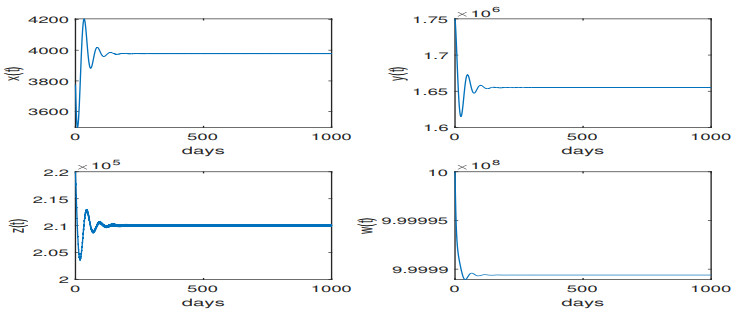
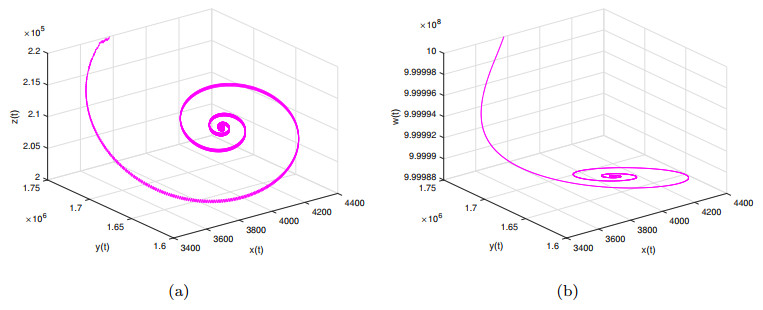
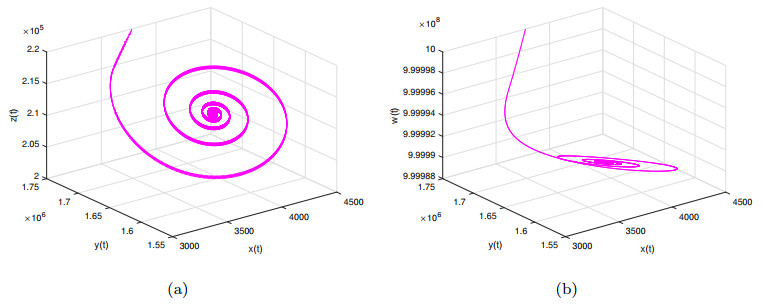
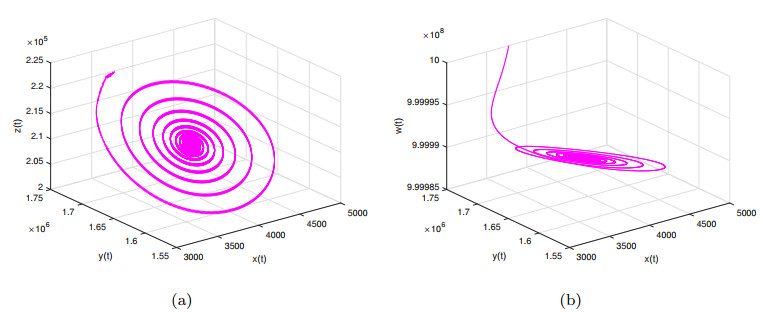
Figure 1.
With ode45 solver, when
$ \tau_1=\tau_2=0 $ $ x $ $ y $ $ z $ $ w $ -
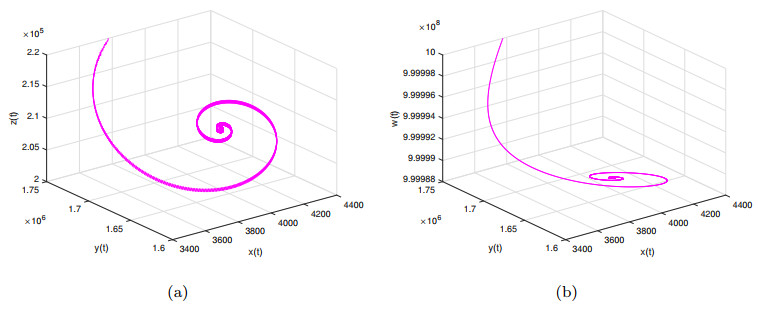
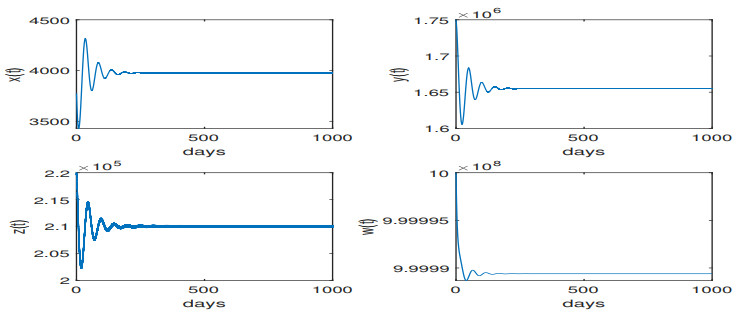
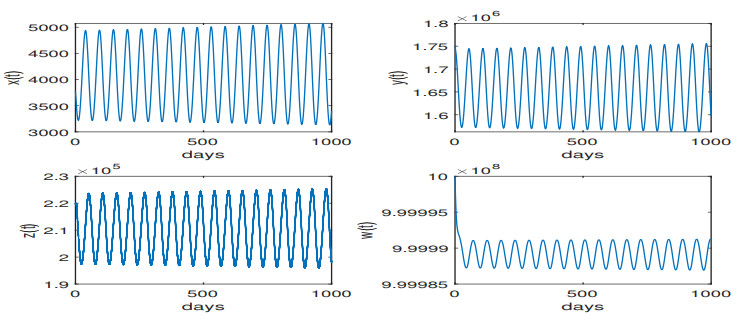
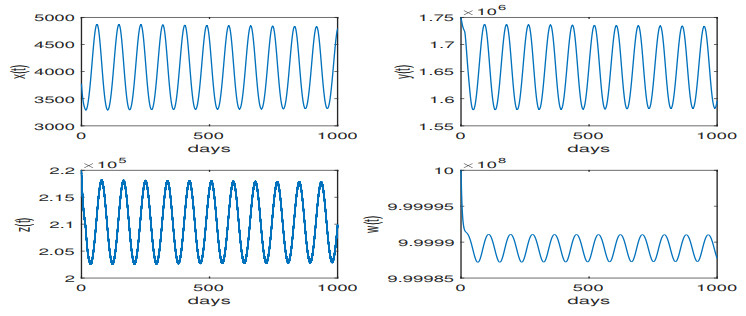
Figure 2.
With ode23 solver, when
$ \tau_1=\tau_2=0 $ $ x $ $ y $ $ z $ $ x $ $ y $ $ w $ -
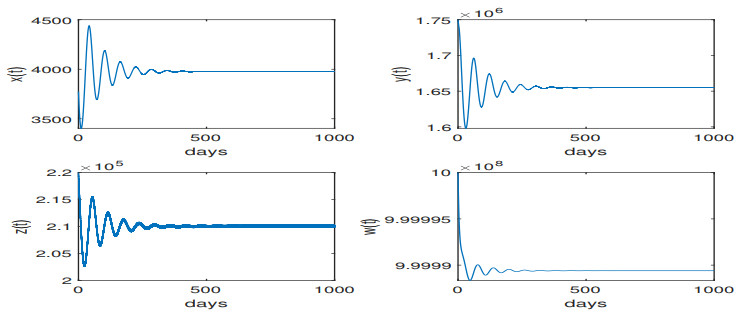
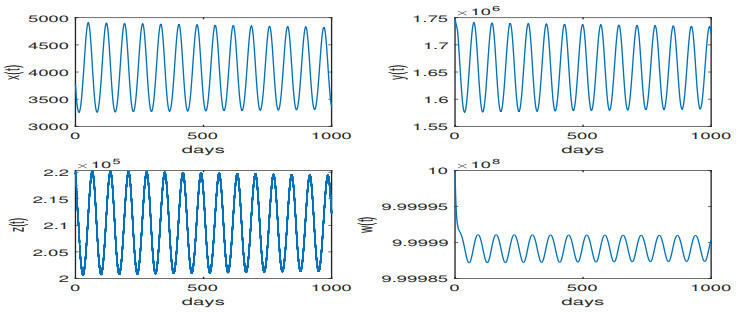
Figure 3.
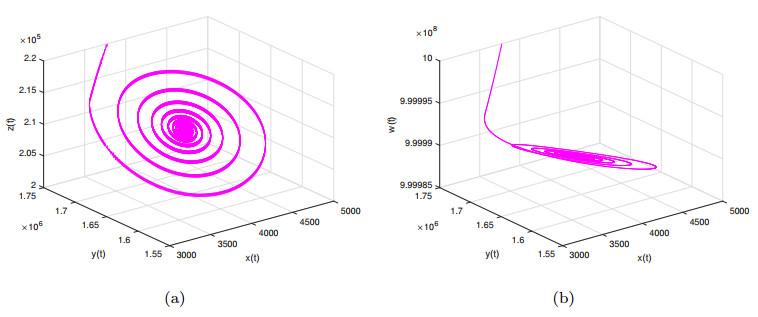
With dde23 solver, when
$ \tau_1=0,\tau_2=1<\tau_{20} $ $ x $ $ y $ $ z $ $ w $ -
Figure 4.
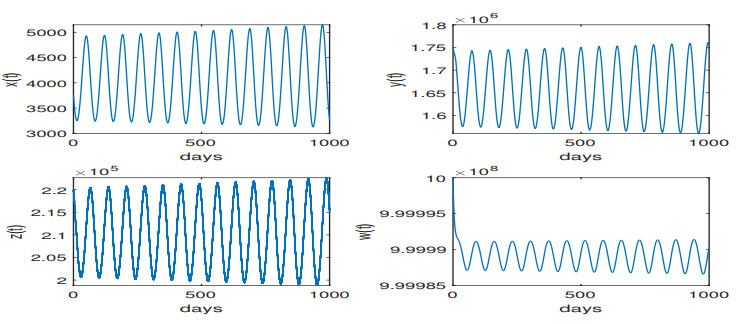
With dde23 solver, when
$ \tau_1=0,\tau_2=1<\tau_{20} $ $ x $ $ y $ $ z $ $ x $ $ y $ $ w $ -
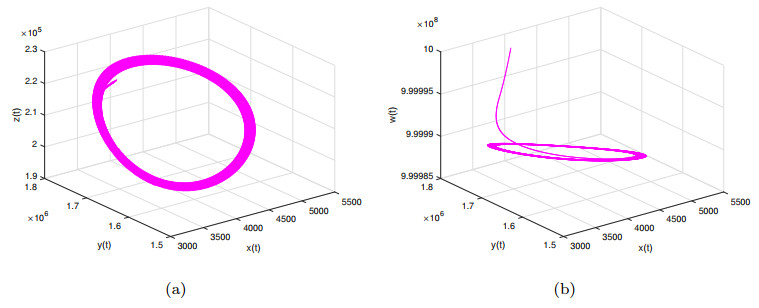
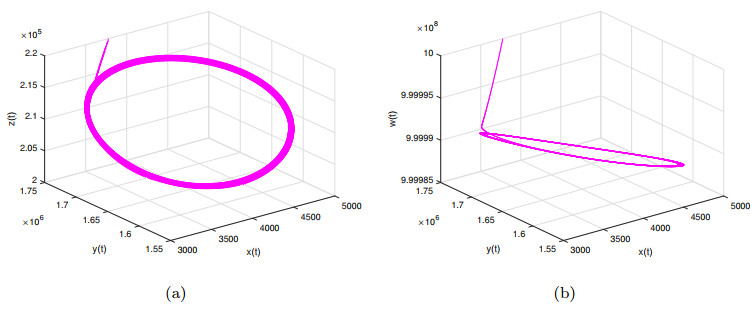
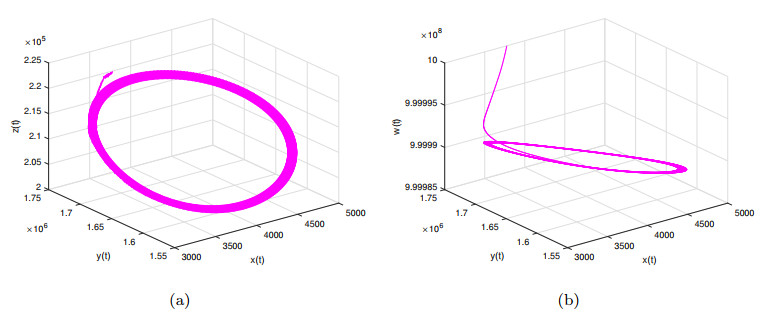
Figure 5.
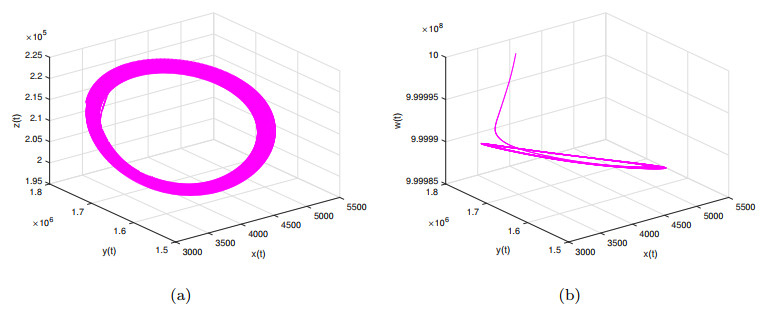
With dde23 solver, when
$ \tau_1=0,\tau_2=3.95>\tau_{20} $ $ x $ $ y $ $ z $ $ w $ -
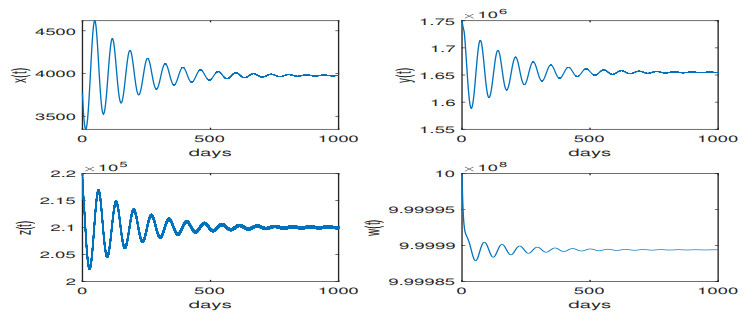
Figure 6.
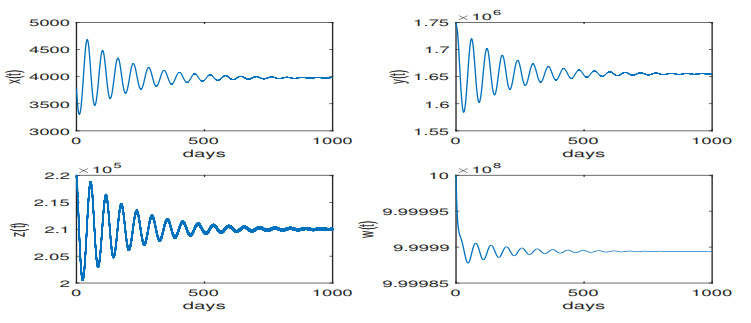
With dde23 solver, when
$ \tau_1=0,\tau_2=3.95>\tau_{20} $ $ x $ $ y $ $ z $ $ x $ $ y $ $ w $ -
Figure 7.
With dde23 solver, when
$ \tau_2=0,\tau_1=4<\tau_{10} $ $ x $ $ y $ $ z $ $ w $ -
Figure 8.
With dde23 solver, when
$ \tau_2=0,\tau_1=4<\tau_{10} $ $ x $ $ y $ $ z $ $ x $ $ y $ $ w $ -
Figure 9.
With dde23 solver, when
$ \tau_2=0,\tau_1=13.7>\tau_{10} $ $ x $ $ y $ $ z $ $ w $ -
Figure 10.
With dde23 solver, when
$ \tau_2=0,\tau_1=13.7>\tau_{10} $ $ x $ $ y $ $ z $ $ x $ $ y $ $ w $ -
Figure 11.
With dde23 solver, when
$ \tau_1=7\in(0,\tau_{10}),\tau_2=0.2<\tau_{20}^* $ $ x $ $ y $ $ z $ $ w $ -
Figure 12.
With dde23 solver, when
$ \tau_1=7\in(0,\tau_{10}),\tau_2=0.2<\tau_{20}^* $ $ x $ $ y $ $ z $ $ x $ $ y $ $ w $ -
Figure 13.
With dde23 solver, when
$ \tau_1=7\in(0,\tau_{10}),\tau_2=2.1>\tau_{20}^* $ $ x $ $ y $ $ z $ $ w $ -
Figure 14.
With dde23 solver, when
$ \tau_1=7\in(0,\tau_{10}),\tau_2=2.1>\tau_{20}^* $ $ x $ $ y $ $ z $ $ x $ $ y $ $ w $ -
Figure 15.
With dde23 solver, when
$ \tau_2=2\in(0,\tau_{20}),\tau_1=3<\tau_{10}^* $ $ x $ $ y $ $ z $ $ w $ -
Figure 16.
With dde23 solver, when
$ \tau_2=2\in(0,\tau_{20}),\tau_1=3<\tau_{10}^* $ $ x $ $ y $ $ z $ $ x $ $ y $ $ w $ -
Figure 17.
With dde23 solver, when
$ \tau_2=2\in(0,\tau_{20}),\tau_1=7>\tau_{10}^* $ $ x $ $ y $ $ z $ $ w $ -
Figure 18.
With dde23 solver, when
$ \tau_2=2\in(0,\tau_{20}),\tau_1=7>\tau_{10}^* $ $ x $ $ y $ $ z $ $ x $ $ y $ $ w $ -
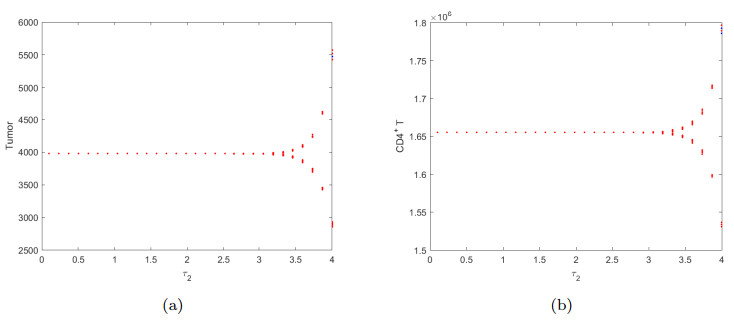
Figure 19.
With dde23 solver, when
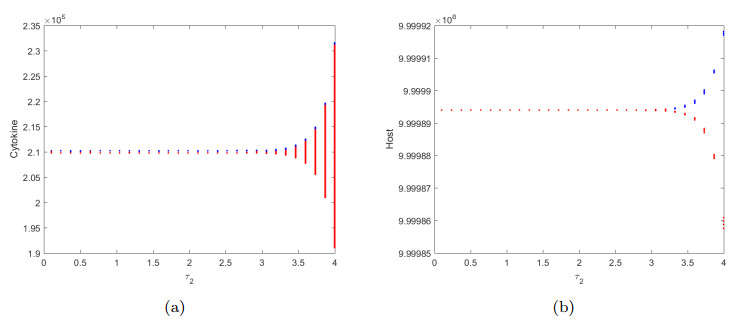
$ \tau_1=0,\tau_2\in(0,4) $ $ \tau_2 $ $ \tau_2 $ -
Figure 20.
With dde23 solver, when
$ \tau_1=0,\tau_2\in(0,4) $ $ \tau_2 $ $ \tau_2 $ -
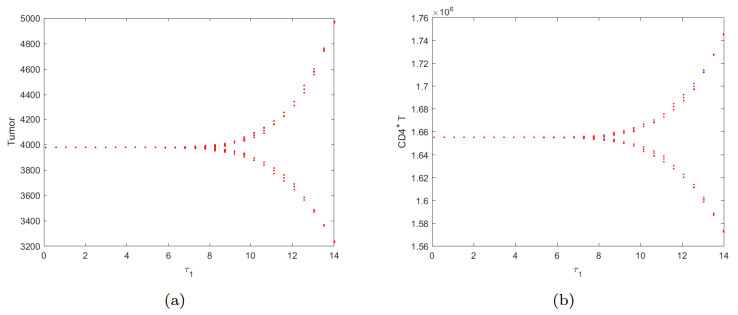
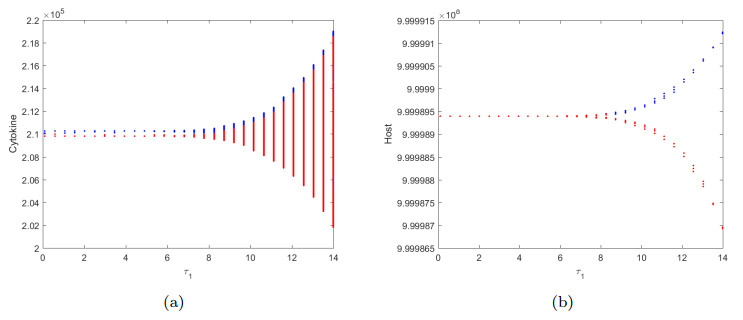
Figure 21.
With dde23 solver, when
$ \tau_2=0,\tau_1\in(0,14) $ $ \tau_1 $ $ \tau_1 $ -
Figure 22.
With dde23 solver, when
$ \tau_2=0,\tau_1\in(0,14) $ $ \tau_1 $ $ \tau_1 $ -
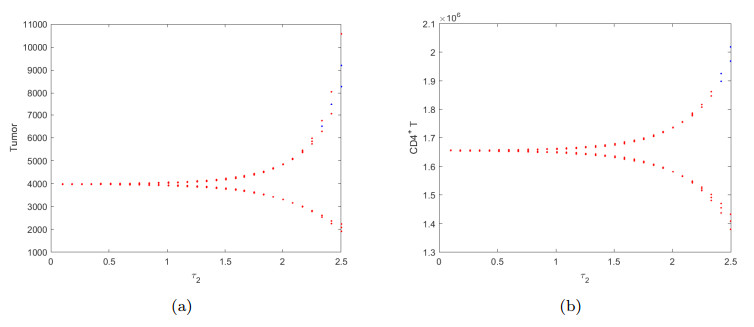
Figure 23.
With dde23 solver, when
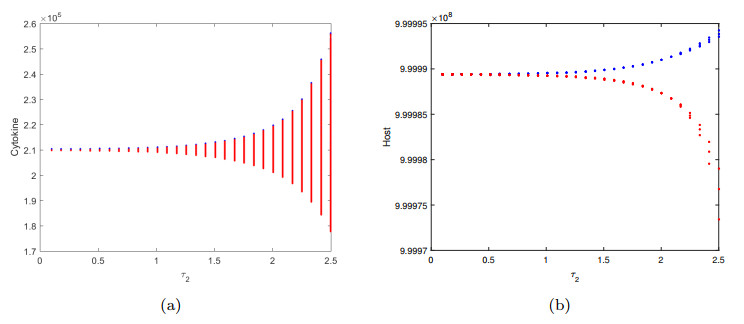
$ \tau_1=7, \tau_2\in(0,2.5) $ $ \tau_2 $ $ \tau_2 $ -
Figure 24.
With dde23 solver, when
$ \tau_1=7, \tau_2\in(0,2.5) $ $ \tau_2 $ $ \tau_2 $ -
Figure 25.
With dde23 solver, when
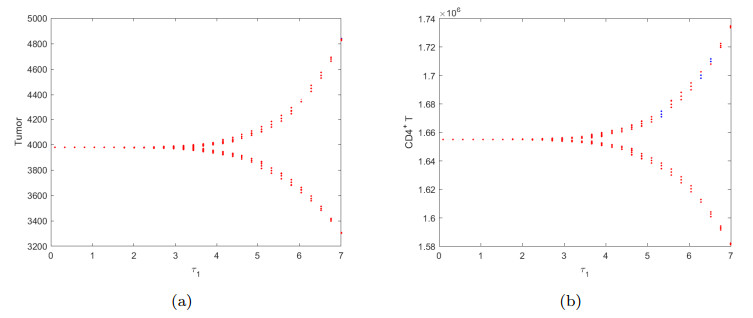
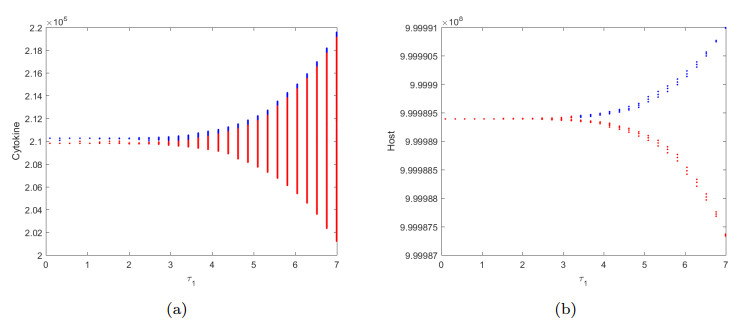
$ \tau_2=2, \tau_1\in(0,7) $ $ \tau_1 $ $ \tau_1 $ -
Figure 26.
With dde23 solver, when
$ \tau_2=2, \tau_1\in(0,7) $ $ \tau_1 $ $ \tau_1 $ -
Figure 27.
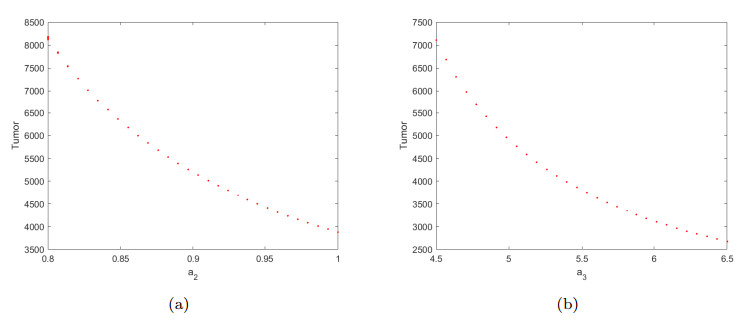
With ode45 solver, in absence of delay, (a) the influence of production rate of CD4+ T cells
$ a_2\in(0.8,1) $ $ a_3\in(4.5,6.5) $ -
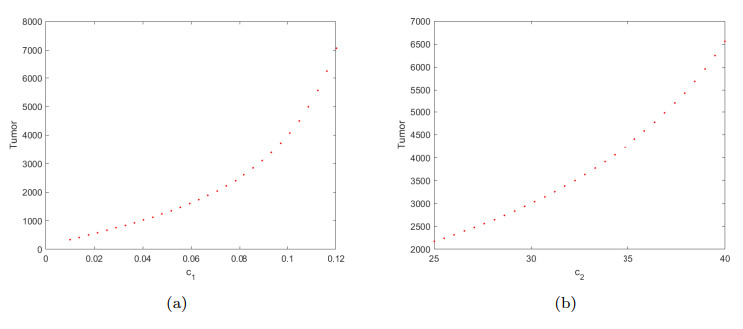
Figure 28.
With ode45 solver, in absence of delay, (a) the influence of natural death rate of CD4+ T cells
$ c_1\in(0.01,0.12) $ $ c_2\in(25,40) $ -
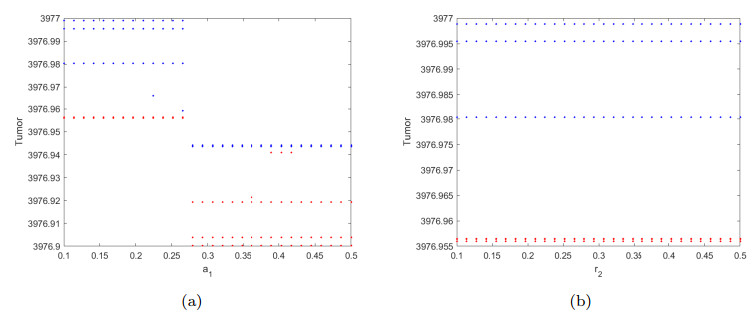
Figure 29.
With ode45 solver, in absence of delay, (a) the influence of tumor-killing rate by cytokines
$ a_1\in(0.1,0.5) $ $ r_2\in(0.1,0.5) $ -
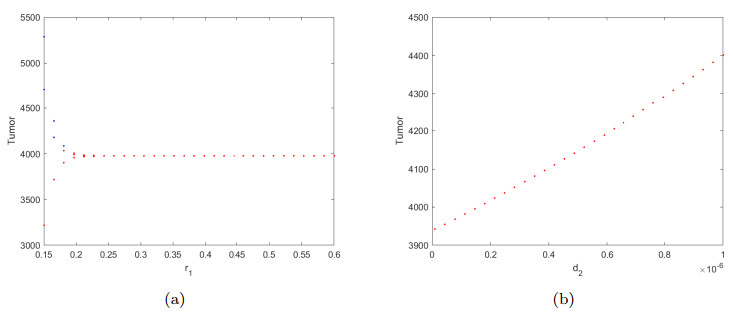
Figure 30.
With ode45 solver, in absence of delay, (a) the influence of intrinsic growth rate of tumor cells
$ r_1\in(0.15,0.6) $ $ d_2\in(10^{-8},10^{-6}) $ -
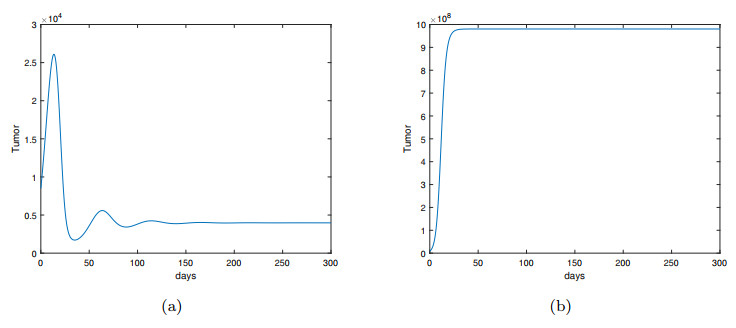
Figure 31.
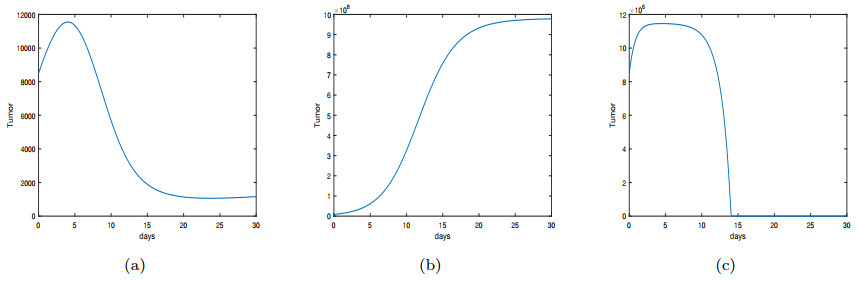
With ode45 solver, in absence of delays, without injection treatment, (a) the influence of initial values
$ (8.5\times 10^3, 10^6, 1.5\times10^5, 9.5\times10^8) $ $ (8.5\times 10^6, 10^6, 1.5\times10^5, 9.5\times10^8) $ -
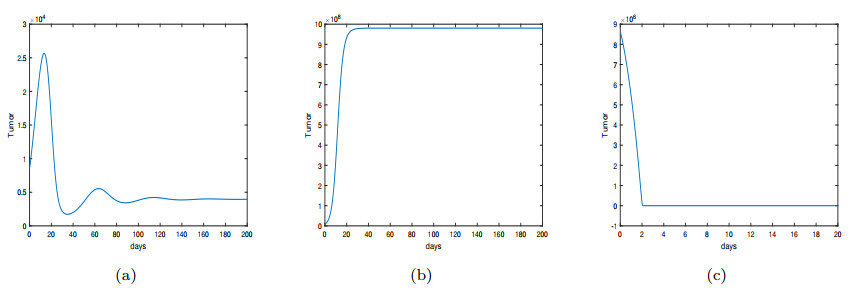
Figure 32.
With ode45 solver, in absence of delays, (a) the influence of injection treatment of only CD4+ T cells
$ I_1=10^5, I_2=0 $ $ (8.5\times 10^3, 10^6, 1.5\times10^5, 9.5\times10^8) $ $ I_1=10^5, I_2=0 $ $ (8.5\times 10^6, 10^6, 1.5\times10^5, 9.5\times10^8) $ $ I_1=1.6\times 10^8, I_2=0 $ $ (8.5\times 10^6, 10^6, 1.5\times10^5, 9.5\times10^8) $ -
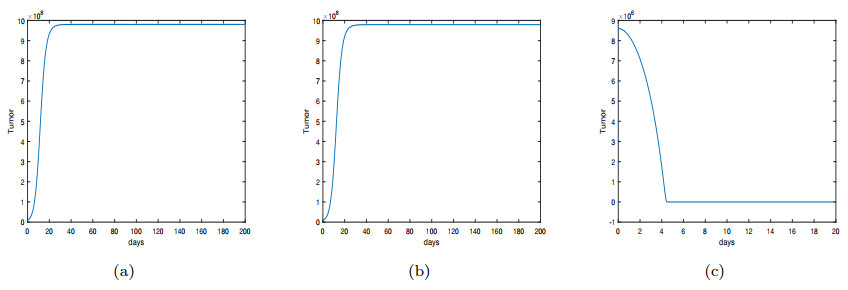
Figure 33.
With ode45 solver, in absence of delays, (a) the influence of injection treatment of only cytokines
$ I_1=0, I_2=10^4 $ $ (8.5\times 10^3, 10^6, 1.5\times10^5, 9.5\times10^8) $ $ I_1=0, I_2=10^4 $ $ (8.5\times 10^6, 10^6, 1.5\times10^5, 9.5\times10^8) $ $ I_1=0, I_2=10^9 $ $ (8.5\times 10^6, 10^6, 1.5\times10^5, 9.5\times10^8) $ -
Figure 34.
With ode45 solver, in absence of delays, with the same initial condition
$ (8.5\times 10^6, 10^6, 1.5\times10^5, 9.5\times10^8) $ $ I_1=10^4, I_2=10^5 $ $ I_1=10^7, I_2=10^8 $ $ I_1=10^7, I_2=6\times 10^8 $